Education
Introduction
The year 2024 formed a milestone for Erasmus University Rotterdam (EUR). It marked the end of both the strategic period (EUR 20–24) and the Quality Agreements. The past four years have been eventful. During these years, we have implemented our education agenda, worked hard to deliver impact-driven, inclusive and future-proof education and continued to improve the quality of our education.
We have made extensive and admirable strides. In all faculties, we have developed programmes that exemplify the concept of impact-driven and engaged education. These programmes encourage students to empathise with other viewpoints and develop their own opinions on complex issues. They do this in coordination and collaboration with social stakeholders, from the business community to local residents.
We are a Rotterdam-based university operating in a national and international landscape from a strong regional position. We achieve this through a variety of strategic alliances, including Convergence, LDE Universities and UNIC. Internationalisation was in the spotlight again in 2024, particularly due to the Balanced Internationalisation Bill (Wet Internationalisering in Balans, WIB) and the associated Foreign Language Education Test (TAO). EUR has taken up the challenge of re-examining how internationalisation aligns with the way we want to educate our students and how we want to deal with foreign-language programmes.
Our educational vision, which was updated in 2023, prompted a review of our comprehensive policy on accessibility, ‘Access & Equity’. We want to be a university where everyone is welcome and able to realise their full potential. Accordingly, we continue to work hard to create a strong learning environment. We evaluated and amended our admission and selection procedures, which led to updated ambitions for Access & Equity. In the coming years, we will transform these ambitions into a new policy agenda. The resulting practical implications will contribute to making the university a more accessible place to work. As an extension of this work, we are also working on improving accessibility for a wider audience through lifelong learning (LLO). See: Spotlight.
We continue to work on the conditions for a strong educational environment. We are addressing high workloads and academic pressure with the aim of teaching smarter. A big step towards this goal is the Smarter Academic Year, which we rolled out in 2024. The associated recommendations were set out in a strategic implementation plan. These recommendations formed the basis for an implementation pathway that began in 2024 and will result in smarter annual timetables and curricula from 2025–2026 onwards. We are also participating in ‘A Smarter Academic Year’, a four-year nationwide project coordinated by the Ministry of Education, Culture and Science (Ministerie van Onderwijs, Cultuur en Wetenschap, OCW). A number of programmes continued to develop their pilots in 2024.
Lecturer quality is another key prerequisite for a strong learning environment. In 2024, the Community for Learning & Innovation (CLI) and its partners made further progress in lecturer development, educational innovation and student support. The award of the Npuls grant enabled us to encourage and improve educational innovation (including AI) and the quality of higher education. In addition, the Lecturer Development Working Group started implementing the Lecturer Development Policy Framework, which was finalised in 2024.
Two cross-disciplinary themes, Student Wellbeing and Inclusiveness, deserve to be mentioned. These are important components of both education and projects, as well as being a prerequisite for creating a strong learning environment. In 2024, Student Wellbeing got a boost from the ROOM app and lecturer training. Inclusiveness focused on ‘soft landings’ for new students, lecturer development, social safety, and better provision of information to specific student groups about the ins and outs of university life.
In 2024, we also focused in greater depth on the range of courses we offer and on educational quality. For instance, we made preparations for new programmes focusing on impact and engagement, and 22 programmes were evaluated in 2024. Furthermore, the new EUR quality assurance vision was adopted, and we worked on improving the quality culture. Finally, we continued to develop participation in decision-making.
Impact-driven education for all students
EUR is committed to providing education in which students actively collaborate with people outside the university to tackle local, regional and international societal challenges. Examples include energy poverty and access to health care. With our focus on ‘impact-driven education’, since 2020, EUR has been committed to delivering education that prepares students to contribute to understanding these complex challenges and solving them where possible.
Impact-driven education: transferring to ‘the core’
The Impact at the Core curriculum was completed in late 2024 and transferred to the CLI. Over the next few years, we will continue to work on implementing impact-driven education. The focus will be on challenges such as the energy transition, accessible health care and inclusive prosperity.
Visible commitment to our local area
EUR worked on social issues with a growing number of local partners in 2024. ESSB students organised activities for newcomers to Rotterdam during a ‘working week’ in collaboration with MDT op Zuid and De Werkshop. Students also tackled challenges arising from the neighbourhood-based education initiative Werkplaats Crooswijk. Twelve second-year Health Sciences students from ESHPM mapped the consequences for professionals and residents of the discontinuation of the Crooswijk Coach. In addition, 24 Public Administration students worked on the participation challenges faced by various organisations in Crooswijk for their Bachelor’s thesis.
Joining forces
Many lecturers face similar challenges in impact-driven education. Within Impact Community Health, lecturers collaborate with stakeholders in the welfare and health sectors. They explore how to further increase the impact of different efforts, promote meaningful partnerships and identify opportunities for collaboration.
In 2024, we launched the knowledge platform for impact-driven education. The platform provides inspiring knowledge and tools to stimulate positive societal change in higher education. An example is the ESSB’s e-modules, which prepare students to collaborate with external partners.
Strategic alliances
EUR invests in key collaborations that better connect degree programmes with the broader social context.
Leiden-Delft-Erasmus Universities
Within the Leiden-Delft-Erasmus Universities (LDE) alliance, EUR collaborates with Leiden University and Delft University of Technology (TU Delft), mainly in the provision of joint electives and final projects. Past LDE achievements include:
- Interdisciplinary Thesis Labs organised by the LDE Centre for Sustainability.
- The launch of two new LDE minors: Future Challenges Lab: Co-creating sustainable practices in and beyond the Indonesian City and SDG-based entrepreneurship in organisations.
- The new Bachelor's programme in Economics & Society (accreditation and launch).
- Submission of a proposal to the LLO Catalyst grant programme in conjunction with The Hague University of Applied Sciences (Haagse Hogeschool), the Association of Dutch Municipalities (Vereniging Nederlandse Gemeenten) and other external parties for a set of joint courses relating to the heating transition in the urban environment.
- Publication by members of the LDE Community of Practice on Interdisciplinary and Transdisciplinary Education of a Position Paper entitled ‘Towards Transdisciplinary Education’ (Sturen op Transdisciplinair Onderwijs). The paper contained recommendations for sustainably embedding transdisciplinary education at the three partner universities, enabling a joint approach within the region.
Convergence: a collaboration between EUR, Erasmus MC and TU Delft
EUR, Erasmus University Medical Centre (Erasmus MC) and TU Delft have joined forces in the Convergence alliance to tackle urgent societal issues. A number of initiatives were developed in 2024:
- The Health & Technology programme initiated the development of a transdisciplinary Research Master’s in Sustainable Health.
- Healthy Start developed the Local to Global course, in which students explore the impact of global challenges on local communities, guided by civil society partners.
- The Pandemic & Disaster Preparedness Centre organised a Winter School on transdisciplinary and transformative research for PhD students and postdocs.
- Our programmes also collaborated with other partners on Summer Schools. For example, Resilient Delta teamed up with Erasmus Connects (Erasmus Verbindt) to bring practical problems into the lecture hall, preparing students to solve complex societal issues.
Operating on an international playing field
EUR is a leading, international, groundbreaking and world-class academic institution; as such, it has a strong international reputation in the Social Sciences and Humanities (SSH) domain. Internationalisation is in the university’s DNA. At the same time, we have strong local and regional roots.
Internationalisation is about cooperation, knowledge sharing and mobility across national and cultural borders. It is essential for education, research and innovation. We are working to strengthen our visibility and competitiveness, partly through European grant programmes, such as Horizon Europe and the Erasmus+ programme.
Current political and geopolitical challenges and societal dynamics call for adaptive and future-focused action on international partnerships and collaboration. EUR is responding to that need.
The challenge of the Balanced Internationalisation Act (WIB)
In 2024, we organised working sessions to prepare faculties for the anticipated Foreign Language Education Test (Toets Anderstalig Onderwijs, TAO). There was uncertainty around this in 2024. The impact of the WIB on higher education is expected to be significant. This applies to finances, student progression to Master’s programmes and the loss of talent, research potential, staffing, educational quality, collaborations with various external and international partners, and interdisciplinary and transdisciplinary education.
Connecting perspectives
EUR is distinguished by an interdisciplinary and transdisciplinary focus on relevant global issues and by educating a diverse community of global citizens to provide solutions to urban and global challenges.
Active participation in platforms and networks within and outside Europe and international collaborations in various alliances allow us to connect our global orientation with the creation of positive social impacts at the local and regional level and strengthen the EUR profile. In 2024, the EUR had 215 unique partnerships based on a memorandum of understanding or a bilateral Erasmus+ agreement. Many of these partnerships involved exchanges. EUR also has numerous agreements tied to grants for collaboration in education and research.
International alliances that are important for EUR in the context of European collaboration and internationalisation in education and research include the European Universities Initiative – in which EUR is the coordinator of UNIC – and the European Institute of Innovation & Technology (EIT) – in which EUR is involved with EIT Health and EIT Culture & Creativity.
UNIC: a gateway for engaged education and research in Europe
EUR is the coordinator of the UNIC European University alliance. This is an alliance of ten universities in post-industrial cities, financially supported by the European Commission. UNIC strengthens international collaboration, contributes to EUR’s strategy and offers students and staff new opportunities in education, research and community engagement.
In 2024, the joint MSc on Redesigning the Post-Industrial City was officially accredited by the Ministry of Education, Culture and Science. This two-year interdisciplinary Master’s programme, offered in collaboration with seven UNIC partners, focuses on urban transformation in a changing economy and climate context.
UNIC promotes collaboration based on ‘thematic lines’. Researchers and lecturers develop innovative solutions to societal challenges such as superdiversity, sustainability, art and entrepreneurship. A number of projects were implemented in 2024. Examples include:
- Superdiversity: collaboration with Rotterdam City Council on mapping diversity. EUR is participating through its IDEA Centre.
- Sustainability: integrating urban challenges into the UNIC Summer School. EUR is represented by IHS.
- Art & Creativity: Training in urban problem solving and artistic research (ESHCC).
- Entrepreneurship & Innovation: PhD network and collaboration with Rotterdam City Council (ECE).
We also launched an online course catalogue to enable European students to take courses at EUR. Innovative educational initiatives, such as the ESSB Summer School on educational innovation, strengthen collaboration within the alliance.
EUR intensified collaboration between staff and lecturers from UNIC partners. The CLI and Ruhr University Bochum (Ruhr Universität Bochum) developed a microlab for virtual exchanges, and EUR ran training courses on diversity and inclusion. In addition, a network was set up within the UNIC Capacity Building Centre for Research/Funding services, International Offices, IT services and Learning & Innovation.
This strategic collaboration strengthens EUR’s position and contributes to the development of a future-proof European University.
EIT Health
EIT Health promotes collaboration between research and industry in the area of health innovation. In collaboration with DRIFT and ESHPM, Rotterdam hosted the annual EIT Health Summit in April 2024. In addition, ESHPM researchers participated in the flagship project InEurHeart.
Two new projects received grants in a new round: PregnaDigit EU and MORESCREEN. Thanks to EIT Health and these projects, ESHPM was able to establish many new international collaborations.
EIT Culture & Creativity
In spite of high expectations, EIT Culture & Creativity, the consortium for the cultural and creative sectors in which ESHCC and RSM participate, was plagued in 2024 by operational delays, issues around leadership and governance, and uncertainty about its continued existence. The network of partners and the opportunities to collaborate outside the formal structure of the consortium remain the main source of potential or actual value.
Responsible partnerships and collaboration
Two advisory committees were launched in 2024, focusing on sensitive collaborations and partnerships with the fossil industry. We think it is important to examine not only the risks of collaborating, but also the risks of not collaborating. The committees developed frameworks for assessing collaboration and non-collaboration and started case-based assessments and the development of focused and considered opinions. In terms of sensitive collaborations, the war between Israel and Palestine was prioritised. At the same time, the Administrative Affairs Department (Bestuurlijke Zaken, BZ) continued to develop frameworks for knowledge security and integrated safety, with the aim of making targeted decisions on requests for advice on responsible collaboration.
Promoting international mobility
We encourage inbound and outbound mobility for students, lecturers, researchers and support staff. In 2024, around 600 students, 50 lecturers and 65 support staff made use of an exchange programme with financial support from the Erasmus+ programme. In addition, EUR received over €2.5 million in funding for three years. Various hybrid forms of mobility, such as virtual exchanges and digital collaboration, were also utilised.
Internationalisation and education
In addition to collaboration within UNIC and joint international programmes (such as joint degree programmes), the faculties are working to further integrate the international context into study programmes and develop an ‘international classroom’. A key development has been supported and stimulated by European policy (EU Pact for Skills) and concerns lifelong learning and microcredentials. A grant of €2 million was awarded by the National Growth Fund for this purpose in 2024. In addition, three study programmes received an Erasmus+ Mundus Grant: GLOCAL, EMLE and IMARC. Each received around €5 million.
Support and facilitation
International collaboration requires proper coordination between various support services. In 2024, we encountered challenges around aligning systems for international online education and implementing an online course catalogue for cross-border collaboration. The European Erasmus Without Papers (EWP) project, relating to the digitalisation of the administration underlying study exchanges with foreign partners, is also facing delays in implementation. On a positive note, the development of VIDATUM has been successfully completed. This software system was developed for ERS and the faculties and is now used for research portfolio and grant/project management.

Access & Equity
In 2024, we drafted a position paper as part of the preparations for our new institutional strategy. This paper positions broader accessibility and equity within our role as a civic university and our EUR-wide mission to achieve positive societal impact (Strategy ‘24 and Erasmian values). Together with the Access & Equity educational ambitions we have formulated, the paper elaborates on the updated educational vision with reference to these themes. It also helps shape the university’s Access & Equity policies.
In 2023 and 2024, we evaluated our policy around the Binding Study Advice (BSA) (Nominal is Normal) in the light of study success, dropout rates and results, partly in response to Minister Dijkgraaf’s plans to relax the BSA standard. Using a broad analysis, based on graduation data and diploma results, we tried to visualise the potential consequences of a reduction in the BSA standard for our institution. As a result of this analysis, we decided to identify our accompanying policies and optimise them in the light of study and student success.
We also analysed our admission and selection procedures, in response to national developments and the results of an inspection report on admission and selection. This process resulted in an advisory memo with specific recommendations for improving our admission and selection procedures for Bachelor’s and Master’s programmes. In 2025, the recommendations will be incorporated into a focused implementation plan.
OC&W’s Smarter Academic Year (SAY) programme
The academic year in the Netherlands is one of the longest in Europe and, according to the Young Academy, is a cause of higher workloads for students and staff. In 2022, the Ministry of Education, Culture and Science (OC&W) launched the ‘Smarter Academic Year’ project to investigate whether the number of teaching weeks could reasonably be reduced and/or whether educational activities could be designed in a smarter way. The aim is to create more ‘downtime’ for students and lecturers.
EUR and the University of Amsterdam are the joint coordinators for this national pilot. At EUR, three faculties (RSM, ESL and ESHCC) are participating, with each running its own pilot.RSM is focusing on assessment innovation and teaching-free weeks, with the aim of reducing the number of teaching weeks and offering more integrated assessment and concentrated education.ESL has replaced the thesis track with a Master’s dissertation in the Master’s programme in Law & Technology. Students are working on specific learning objectives, with the aim of reducing workloads. An interim evaluation shows that workloads are manageable for students, despite the shorter academic year.
ESHCC is reducing peaks in workload by adjusting the BA-1 calendar for the History and International Bachelor (IB) in History programmes and better aligning it with the rest of the faculty. An advisory report described three scenarios for a new annual calendar and a curriculum review that would align the Bachelor of History more closely with the rest of EUR.
A successful national knowledge-sharing meeting was held in 2024. EUR also commissioned an external monitoring expert to obtain insights, through reflexive monitoring, into the contribution of the various pilots to more downtime during the academic year. The expert began collecting information on each pilot in May to examine what is working and what isn’t. In addition, reflexivity is built in through knowledge sharing between the pilots and adjustments to those pilots
Smarter Academic Year
To ease academic pressure and workloads at EUR and create more opportunities for interdisciplinary and project-based collaboration, the internal EUR Smarter Academic Year project was launched alongside our participation in, and coordination of, the national Smarter Academic Year pilot.
In 2024, the Smarter Academic Year task force completed a strategic implementation plan. This plan is the main deliverable for Phase 2 of the Smarter Academic Year policy process, in which the results of the analysis in Phase 1 (exploration of change scenarios and the Turner report) were used to develop targeted recommendations on how to achieve a smarter academic year. The aim of the project is to create more downtime for lecturers, students and support staff, and more opportunities for interdisciplinary and project-based collaboration (which also aligns with our impact mission and objectives). The plan has been supplemented with a handbook that provides educational tools for adjusting the annual timetable and curriculum.
In the autumn of 2024, the faculties worked hard on creating blueprints for annual timetables, starting with the 2026–2027 academic year, based on the guidelines in the Smarter Academic Year implementation plan. Before the summer of 2025, the faculties’ final blueprints will be collected, so that they can be implemented from September 2026.
Community for Learning & Innovation: a driver of high-quality education
The Community for Learning & Innovation (CLI) supports lecturers in their professional development and encourages educational innovation at EUR. The CLI helps to create a climate that encourages the continuing professional development of lecturers.
The CLI received an Npuls grant for educational innovation
In 2024, the CLI received an Npuls grant for educational improvement and technology integration. The grant will be used to develop innovative learning methods and strengthen regional collaboration with local authorities, knowledge institutes and businesses. The aim will be to collectively raise the quality of education and meet the needs of the region.
Professional development of lecturers
The CLI offers a range of training courses, such as the University Teaching Qualification (UTQ), the Senior Teaching Qualification (STQ) and the Educational Leadership Course (LOL). It also offers MicroLabs: short, practical modules. The MicroLabs offered are aligned with current developments, such as the use of artificial intelligence (AI) in education.
Increasing demand for STQ places at EUR
The CLI encourages educational leadership through the Senior Teaching Qualification (STQ) and the Educational Leadership Course (LOL). As a result, demand for these programmes rose sharply in 2024, creating a waiting list. The CLI is exploring an expansion of its courses to ensure educational innovation and quality. The growing demand for STQ programmes created a waiting list, highlighting the importance of lecturer development. Appropriate resources and strategies to continue providing the STQ are crucial for maintaining educational innovation and quality at EUR.
TeachEUR and blended teaching
TeachEUR provides teaching activities that improve interaction in classes and enhance teaching quality. The website presents 77 different teaching methods, which are regularly supplemented with expert insights and practical tips. In-depth theory courses were introduced in 2024, this range of courses will be expanded in 2025, including AI case studies and collaboration with the Platform Educational Applications (PEA), which provides an overview of validated digital teaching tools.
Educational innovation and co-creation
The CLI supported 58 innovation projects in the faculties, including the blended pre-Master’s in Pedagogical Sciences. Together with EDIS, the CLI developed Erudite, a secure ChatGPT environment for EUR. Students-for-Students encouraged student-driven initiatives such as LifeVersity, which grew into a social enterprise.
Lecturer development: Erasmus Arts 2030
In 2024, the CLI, together with Erasmus MC and Risbo Research, launched a customised professionalisation programme to help lecturers prepare for the new Medicine curriculum. Erasmus Doctors (Erasmus Arts) 2030 prepares lecturers for the future of medical education at EUR.
Future-focused blended and online education
ErasmusU_Online promotes accessible and inclusive education by developing blended, hybrid and online programmes to complement on-campus education. In the 2023–2024 academic year, the range of courses on offer included several Master’s and pre-Master’s programmes, such as Psychology of Digital Media and Public Governance. New initiatives, such as an online Master’s in Healthcare Law, are being developed. Teaching is designed in multidisciplinary teams, strengthening both educational quality and lecturer professionalisation.
Research and evaluation
CLI fellowships enable lecturers to explore their teaching innovations. In 2024, 25 CLI fellows were active, with projects relating to online and blended education, motivation and skills training. A long-term research project on optimising online education started in ESSB. Fellows shared their knowledge with the community in a variety of ways.
Commitment to innovation for future education: Erasmus X
Erasmus X is renewing education , with a future-focused and student-centred approach. In 2024, the focus was on strategic innovation. This was reflected in projects such as Redefining the Classroom, which promotes experiential learning and lets students work with external partners. AI & Education developed an AI strategy for EUR, focusing on ethics, curriculum development and lecturer professionalisation. Pilot projects were also set up around immersive technology (engaging all senses) and personalised learning, exploring new teaching methods. The CLI is committed to innovative, interactive and future-proof education at EUR.
Student wellbeing
Through the Administrative Agreement and the Student Wellbeing Framework Document 2023–2030, EUR is focusing on improving student wellbeing. Back in 2020, EUR launched an integrated programme to encourage discussions around student wellbeing and to improve wellbeing through prevention programmes.
A permanent fixture on campus since 2023, the Living Room welcomes around ninety students every day for relaxation, socialising and finding information on support services. The Personal Support Hub offers accessible consultations and workshops on stress, sleep problems, addiction and informal care.
To increase mental resilience, a short animated film for education and campaigns was created. In 2024, around 4,000 students participated in Wellbeing Weeks, during which the number of page visits on the Online Wellbeing Platform increased by 400% to 22,000.
Personal development strengthens students’ resilience. In 2024, the ROOM app was launched, along with two new programmes. Around 150 Master’s students participated in these programmes. Each faculty implemented lecturer training on student wellbeing and appointed a wellbeing officer to embed wellbeing and personal development into teaching.
The Student Wellbeing Programme is evidence based. The EUR and nationwide Student Wellbeing Monitors serve as a guide. They show a slight improvement, but student mental health remains a concern. In 2024, work was done to create an academic database on student wellbeing to allow knowledge to be shared internally, nationally and internationally.

Engagement and inclusive education
The IDEA Centre aims to facilitate and create an inclusive educational environment where everyone feels at home and can develop their full potential. The centre offers a variety of projects, policies, tools and training for students and staff to create an inclusive learning environment.
Outreach
2024 was the final year of the strategic outreach programme Connecting Our Future. The programme was implemented in collaboration with primary and secondary schools and focused on reducing systemic and other barriers and exclusion mechanisms. It also supported those involved on the path to educational success. We organised 36 activities, reaching more than 1,400 children and young people. We also trained twenty student ambassadors and supported new grassroots projects that contributed to equal opportunities in education.
Soft landings for new students
We aim to ensure a smooth transition for first-year students, especially those from underrepresented groups. In 2024, we organised three meetings for faculties to share examples of good practice around this theme. In addition, we developed a centralised, inclusive welcome message and created the ‘EUR Student Support Services Lightning Quiz’ to inform new students about the university’s support services and promote an inclusive environment.
Inclusive education
We developed and shared practical guidelines and tools with lecturers to create an inclusive learning environment. Examples include guidelines on discussing political conflicts and a microlab on intercultural communication. We are also working with the faculties to integrate inclusion and diversity into their curricula and train lecturers on these themes.
Engagement with and by students
We organised information sessions to remove barriers to and gaps in institution-wide information. We also held dialogue meetings to enable open discussions on sensitive issues. During Eureka Week, we set up focus groups to better address the needs of specific student groups, such as migrant and underage students.
Social safety for students: Amnesty manifesto
In 2022, EUR signed a manifesto against sexual violence and drew up an action plan, including training courses, workshops and awareness-raising activities. The manifesto was triggered by an Amnesty International investigation in 2021. In 2024, the IDEA Centre evaluated the action plan and concluded that it is essential to keep listening to student needs, for example through town hall-style meetings and roundtable discussions.
Programmes offered and quality of education
In 2024, we made preparations for new programmes focusing on impact and engagement, and further developments were made to the portfolio.
EUR has developed two ‘e-Master’s’ and applied to the Accreditation Organisation of the Netherlands and Flanders (Nederlands Vlaams Accreditatie Orgaan, NVAO) for a new programme review. The two e-Master’s are Advanced Master’s programmes in Marketing in the Age of Data and AI and Sustainability Management.
The Master’s programme Redesigning the Post-Industrial City (ESSB-IHS), developed through the European alliance UNIC, submitted a new application for a macro-efficiency check to the Higher Education Efficiency Committee (Commissie Doelmatigheid Hoger Onderwijs, CDHO); this time, the application received a positive result.
In late 2024, the Dean of ESE asked the Executive Board to approve the termination of the Bachelor’s and Master’s degrees in Fiscal Economics.
Programme evaluations
In 2024, EUR submitted panel reports to the NVAO to maintain the accreditation of 22 degree programmes. Seven programmes made preparations for internal interim evaluations.
This year, in the context of external accreditation (NVAO), site visits took place for the Law and Tax Law inspection group (11 ESL programmes), the international joint European Master’s degree in Law and Economics (ESL), the Master’s in Customs and Supply Chain Compliance (RSM) and the Bachelor’s in Liberal Arts & Sciences (ESSB-Erasmus University College). All programmes received a positive evaluation.
This year, interim programme evaluations took place for the Research Master in Business Data Science at the Tinbergen Institute, four Research Master’s programmes at Erasmus MC and the Advanced Master’s programmes in Development Studies and Master City Developer.
At the national level, the NVAO extended the accreditation period for several programmes. Based on their interim programme evaluations, four programmes were immediately able to meet the conditions for an extension of the accreditation period, if the extension was for more than two years.
Internal quality assurance
EUR’s new educational vision was adopted in 2023. Based on this updated vision, efforts are being made to continue developing EUR’s quality culture and quality assurance system. In 2024, as a result of the new educational vision, a new quality assurance vision was adopted. Activities in 2024 included a professionalisation programme for quality assurance advisers, updating of the TOE tool and further development of the Action Plan, which resulted in a Programme Development Plan.
Participation in decision-making
In 2024, the participation bodies made progress in the areas of inter-faculty collaboration, harmonising practices and improving support for members.
A structure was established for regular consultation, to promote the exchange of information between the various councils and committees. This led to a platform for sharing experiences, challenges and solutions. The exchange of examples of best practice and working documents between faculties facilitates collaboration and allows participation bodies to harness the knowledge and experience of other bodies.
In 2024, a detailed training plan was developed based on input from members of participation bodies, aimed at strengthening knowledge and skills. In addition, the allowances for staff and student members of all committees and councils have been increased.
Interim programme evaluation
Applications for NVAO accreditation in 2024
table 1
| Applications for NVAO accreditation in 2024 | ISAT | NVAO panel visit | Submission date | NVAO decision | |
|---|---|---|---|---|---|
| 1 | B Public Administration | 56627 | 26-27-10-2023 | 05/ 1/2024 | 04/07/2024 (positive) |
| 2 | M Public Administration | 60020 | 26-27/10/2023 | 05/ 1/2024 | 08/07/2024 (positive) |
| 3 | M Research in Public Administration and Organizational Science (research) | 60391 | 09/26/2023 | 05/ 1/2024 | 26/06/2024 (positive) |
| 4 | M International Public Management and Public Policy | 60448 | 26-27/10/2023 | 05/ 1/2024 | 08/07/2024 (positive) |
| 5 | M Customs and Supply Chain Compliance | 75133 | 02/ 9/2024 | 05/ 1/2024 | 14/10/2024 (positive) |
| 6 | M Technical Medicine (joint degree) | 65019 | 10/24/2024 | 05/ 1/2024 | 30/10/2024 (positive) |
| 7 | B Philosophy | 56081 | 11/22/2023 | 05/ 1/2024 | 16/07/2024 (positive) |
| 8 | B Philosophy of a specific discipline | 57084 | 11/22/2023 | 05/ 1/2024 | 24/07/2024 (conditional) |
| 9 | M Philosophy (research) | 60128 | 11/22/2023 | 05/ 1/2024 | 12/09/2024 (positive) |
| 10 | M Philosophy European Master in Law en Economics | 60822 | 11/22/2023 | 05/ 1/2024 | 09/09/2024 (positive) |
| 11 | (joint degree) | 75131 | 02/16/2024 | 11/ 1/2024 | 16/05/2024 (positive) |
| 12 | B Law | 50700 | 27-29/2/2024 | 11/ 1/2024 | 19/12/2024 (positive) |
| 13 | B Taxs Law | 56827 | 27-29/2/2024 | 11/ 1/2024 | 19/12/2024 (positive) |
| 14 | M Law | 60084 | 27-29/2/2024 | 11/ 1/2024 | 19/12/2024 (positive) |
| 15 | M Financial Law | 60086 | 27-29/2/2024 | 11/ 1/2024 | 19/12/2024 (positive) |
| 16 | M Employment Law | 60222 | 27-29/2/2024 | 11/ 1/2024 | 19/12/2024 (positive) |
| 17 | M Company Law | 60408 | 27-29/2/2024 | 11/ 1/2024 | 19/12/2024 (positive) |
| 18 | M Liability and Insurance | 60449 | 27-29/2/2024 | 11/ 1/2024 | 19/12/2024 (positive) |
| 19 | M Togamaster | 60450 | 27-29/2/2024 | 11/ 1/2024 | 19/12/2024 (positive) |
| 20 | M Law of Healthcare | 60451 | 27-29/2/2024 | 11/ 1/2024 | 19/12/2024 (positive) |
| 21 | M Commercial Law | 60452 | 27-29/2/2024 | 11/ 1/2024 | 19/12/2024 (positive) |
| 22 | M Tax Recht | 66827 | 27-29/2/2024 | 11/ 1/2024 | 19/12/2024 (positive) |
| Other NVAO and CDHO procedures | |||||
| Programme | ISAT | Panel visit | NVAO/ CDHO desicion | Application type | |
| 1 | M Redesigning the Post Industrial City | 6-7/03/2024 | 26/06/2024 (positive conditional) | Transfer of accreditation in accordance with the european approch. Macro-efficiency check CDHO |
|
| M Redesigning the Post Industrial City | N/A | 04/10/2024 (positive) | |||
| 2 | M Sustainability Management | 75166 | 12/12/2024 | 3/03/2025 (positive) | Assessment of new programme |
| 3 | M Marketing and Data Intelligence | 09/ 1/2025 | pending | Assessment of new programme | |
| 4 | M Econometrics and Management Science | 60079 | N/A | denied | Change of RIO classification and change to funding level |
| 5 | B Econometrics en Operationele Research | 56833 | N/A | denied | Change of RIO classification and change to funding level |
| 6 | B Fiscal Economics | 56402 | N/A | N/A | Termination |
| 7 | M Fiscal Economics | 66402 | N/A | N/A | Termination |
Interim programme evaluation
table 2
| Interim programme evaluation | |||||
|---|---|---|---|---|---|
| Programme | ISAT | Panel visit | Submission date | Status | |
| 1 | M Research Master Business Data Science (joint degree) | 65024 | 01/26/2024 | 11/ 1/2025 | Completed |
| 2 | M Development Studies (M.A.) | 75012 | 01/26/2024 | 11/ 1/2026 | Completed |
| 3 | M Master City Developer | 75066 | 11/14/2024 | 11/ 1/2026 | Completed |
| 4 | M Health Sciences (research) | 60120 | 12/ 3/2024 | 05/ 1/2028 | Completed |
| 5 | M Health Sciences | 75042 | 12/ 3/2024 | 11/ 1/2027 | Completed |
| 6 | M Molecular Medicine (research) | 60279 | 12/11/2024 | 05/ 1/2028 | Completed |
| 7 | Clinical Research (research) | 60312 | 12/ 3/2024 | 05/ 1/2028 | Completed |
SPOTLIGHT
Lifelong learning (LLO)
Expanding and strengthening flexible education for professionals
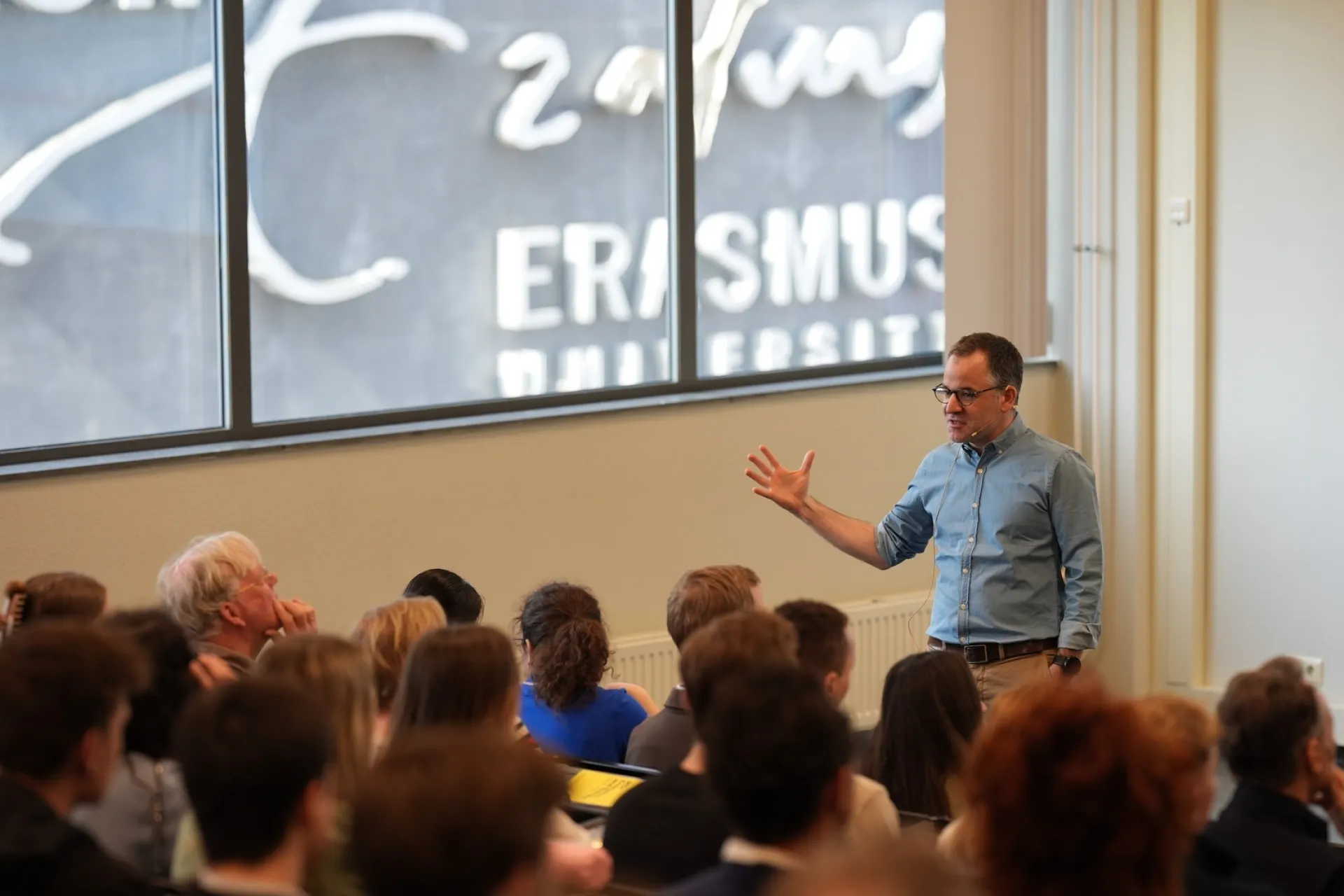
EUR has extensive experience in education for professionals, including executive education. In 2024, we significantly enhanced our range of courses and made them more accessible. Thanks to a €2 million grant from the LLO Catalyst (part of the National Growth Fund), we are building a more transparent and flexible range of lifelong learning courses. In doing so, EUR is positioning itself as an academic partner for professionals and organisations within social transitions.
We are developing a coherent and accessible range of training courses aimed at professionals working in areas such as energy transition and sustainability. We are also strengthening regional collaborations with businesses, public authorities and civil society organisations. In this way, we are sustainably integrating lifelong learning within EUR.