
Research
Introduction
Last year was dominated by putting the finishing touches on the 2024 impact strategy and considering how to build on it. Sometimes, painful choices had to be made. Strategic initiatives from 2020 – 2024 were either given a place in the organisation or continued in another form. One consequence was that EUR had to farewell employees who had put their heart and soul into successfully implementing the 2024 strategy.
The benefits of the strategic initiatives have become apparent. An example is the results of Evaluating Societal Impact (ESI). As ever, Engaged Research Support (ERS, formerly Erasmus Research Support) played a major role in the successes achieved in the area of research. Initiatives from previous strategic periods, such as the Erasmus Initiatives, were also of great value in achieving EUR’s impact ambition this year.
EUR cannot thrive without strong collaboration with other institutions in the Netherlands and abroad. For this reason, strategic alliances such as LDE, Convergence and UNIC are given a prominent place at EUR.
Young talent and good framework conditions are essential to the success of the EUR impact strategy. For more details, see the sections on doctoral candidates, monitoring of research quality, research integrity and the Young Erasmus Academy.
The current situation
Research vision
EUR is at the start of a new strategic period. This period will see EUR build on the current strategy, which is centred around generating positive societal impact. Since EUR’s impact partly stems from the core task of research, the vice-deans of research decided to draw up a research vision, in consultation with the Executive Board. This vision clarifies how EUR research is being transformed from research that is fundamentally driven by curiosity to interdisciplinary and transdisciplinary research. This type of research contributes to EUR’s mission. Multiple meetings were held to develop the research vision, including one attended by around a hundred participants representing a cross-section of the research population. Using various questions as a starting point, diverse groups of people seated at ten tables discussed EUR’s mission, vision and profile. The outcome of these discussions served as the basis for developing the mission, a vision with seven goals and the related ‘strategic priorities’. In 2025, the research vision will be developed further into tangible action points, specifying the research infrastructure needed to achieve the goals set.
Starter and incentive grants
In 2023, the focus was on drawing up plans for the distribution and the sustainable and effective spending of the structural funds that Minister Dijkgraaf had made available for stimulating unfettered research and reducing workloads. 2024 was dominated by the funding cuts imposed by Minister Bruins. Because the funds for starter and incentive grants have largely been cancelled, EUR was forced to disappoint numerous researchers, and many planned research projects were unable to go ahead. In 2024, the remaining grants were awarded to eligible researchers in accordance with the spending plans submitted by the faculties. The number of grants awarded by each faculty is set out in the annual financial report.
Sector plans
In implementing the overarching Social Sciences and Humanities (SSH) sector plan, known as the ‘SSH-Wide’ plan, Erasmus University Rotterdam (EUR) has chosen to fully commit to interdisciplinary study, embedding and development of the theme ‘The impact of digitalisation on work, prosperity and entrepreneurship’. Under this sector plan, funds were made available for the recruitment of 36 FTE assistant professors across the ESE, ESHCC, ESL, ESPhil, ESSB and RSM faculties. By the end of 2024, these funds were almost entirely spent.
Within the SSH-Wide sector plan, we have defined five sub-themes. These can be found on the websites for the sector plans. Interdisciplinary teams have been formed to execute the plans. Each team is coordinated by two theme leaders from different EUR faculties. The teams comprise both the newly recruited assistant professors and the numerous junior and senior staff who volunteered to join. This sizeable influx has increased the SSH-Wide community to over a hundred members.
A number of meetings on each sub-theme were held in 2024. These resulted in various national and international interdisciplinary workshops and seminars being held, as well as research projects (including grant proposals) being set up and teaching modules being developed that transcend the boundaries of the faculties involved in the SSH-Wide Sector Plan. In addition, the entire SSH-Wide community met twice in 2024 at the invitation of the sector plan management team. The first of these meetings was attended and introduced by the Rector Magnificus, while the second was attended by Prof. A. van Buuren (Strategic Dean for Impact & Engagement) and Dr Stefan de Jong. The theme was ‘Impact’.
Impact
Evaluating Societal Impact
From 2020 to 2024, the Evaluating Societal Impact (ESI) strategic initiative focused on facilitating and advising on the development of a governance structure to enable impact activities and developing tools and methods to work on achieving and evaluating impact in a more structured way.
The ESI developed further tools to help the organisation work on achieving impact in a more structured way (see here for an overview of the tools shared with open access). This includes a toolkit made with and for faculties to create faculty impact ambitions and strategies. The toolkit comprises several components, including workshop formats, interview protocols and a set of key focus areas. After an initial collaboration with ESE, in which preliminary versions of these tools were developed, the tools were developed further in collaboration with ESHPM and ESHCC. These faculties worked with their staff to create their own faculty impact ambition and strategy, which they are now developing and implementing.
The ESI team also conducted a number of impact assessments for and with key internal and external stakeholders, such as Erasmus Initiatives, Convergence and ACCEZ. In all of these collaborations, an existing impact evaluation method was developed into a practical method for evaluating impact, with a firm focus on a qualitative, learning approach.
The team actively contributed to EUR’s internal and external visibility. Thanks in part to numerous EUR employees, the ESI team was able to launch the first edition of the EUR Impact Report, which contains many fantastic and inspiring examples of how EUR enables and creates impact. The report was launched on the second day of the Societal Impact Days, which were organised in conjunction with Impact at the Core to inform the wider organisation of the many impact-related initiatives in research, education, engagement and operational management (read an impression of the Societal Impact Days here). The ESI team conducted many Theory of Change workshops and shared its knowledge and experiences at national and international conferences. The team also contributed to various working groups at the national, European and global level. The Journey of Progress card game has found its way around the Netherlands and far beyond, helping a wide audience to easily understand the impact they want to create.
In the area of governance, EUR decided to create the position of Strategic Dean for Impact & Engagement. Prof. Arwin van Buuren was appointed to the role on April 1st. He had previously served as the academic lead of two strategic initiatives aimed at spurring the transition to an impact-driven university: ESI and Impact at the Core. In his role of Strategic Dean, Van Buuren will drive the EUR-wide impact strategy, building connections and reporting on progress. It is currently a four-year role, linked to EUR’s old and new strategies. The Strategic Dean’s responsibilities were jointly determined by the Executive Board and the Board of Deans. Van Buuren advises the Executive Board and deans on impact, engagement and related activities in the areas of research, education and operational management.
Although the ESI project was wound down at the end of 2024 due to the completion of the current strategic period, a number of activities will continue in 2025 to provide ongoing support to the organisation in its transition to an impact-driven university.
ERS ‘Innovation and Partnerships’ Team
I. Impact Journey
In 2024, EUR successfully ran Impact Journey for the third time. This five-session programme helps researchers use their academic work to create societal impact. Participants define a clear mission, design an impact pathway and develop effective communication strategies to engage diverse audiences.
ll. Spin-offs
Two spin-offs were established in 2024. FiHeTo is a knowledge centre in the emerging field of responsible and sustainable film tourism. It supports regional development, using cinematic heritage to attract visitors and boost local economies. The other spin-off is GoalStart BV, which was established to develop the goal-setting intervention created by the Rotterdam School of Management (RSM) into user-friendly and scalable solutions to improve the study success of students around the world and significantly reduce dropout rates. This spin-off is overseen by the research group led by Prof. Michaéla Schippers.
lll. Impact pathways
The university provided strategic support for the impact development of the ‘If you ask us’ initiative, led by Dr Marjolijn Heerings (ESHPM). This initiative aims to improve the quality of care in healthcare institutions and home care settings. It is now equipped to implement a sustainable adoption model based on a ‘train-the-trainer’ approach, including a certification framework and licensing model.
lV Arts, Culture and Creativity Community (A3C)
In June 2024, the first meetings of EUR’s new Arts, Culture and Creativity Community (A3C) were held. This community aims to increase the internal and external visibility of all researchers working in the cultural and creative sector. The idea behind it is that these sectors can drive change, especially in relation to the major transition issues of our times. Moreover, the consumption of arts and culture contributes to welfare and wellbeing. ESHCC is a pioneer in this area, but nearly all of the other faculties are working on these issues from their own perspective. The ‘Just Fashion Transition’ seminar attracted academics, students, businesses, policymakers and professionals from the fashion and textile industry. Mariangela Lavanga (ESHCC) was joined by speakers including Brigitte Stepputtis (Vivienne Westwood), Hilde van Duijn (Circle Economy Foundation) and Jeremy Even (the startup PrimalSoles). Mariangela and Brigitte spoke again the following day, along with fashion designers Joline Jolink and Niki de Schrijver (Cosh.eu). The audience was made up of fashion students from all the relevant programmes in Rotterdam. The seminars held in collaboration with Fashion in Flux, which embraced the theme at the New Institute in the same week. Following these events, a magazine was published that brought more attention to these issues. The launch of the Digital Culture, Art & AI expert practice by Trilce Navarrete Hernandez (ESHCC) at ECDA and activities with the immersive tech network in Rotterdam (now South Holland Immersive Network & Ecosystem, SHINE) also took place, confirming the steady expansion of the A3C ecosystem.
Wellbeing
EUR has a partnership related to wellbeing with the City of Rotterdam, which it set up in conjunction with Delft University of Technology (TU Delft), Erasmus MC and a wide range of societal stakeholders.
In 2024, a Monitor of Wellbeing was developed for the Province of South Holland, and the university is a partner in two regional deals focusing on the achievement of wellbeing in the regions. In addition, partners regularly call on prominent academics with extensive knowledge of wellbeing, such as Prof. Martin de Jong and Prof. Martijn Burger, to give presentations and contribute to events. A university professor, Frank van Oort, was appointed in late 2024. He has been given a mandate to work with partners on the next steps in developing a wellbeing growth agenda.
Erasmus Initiatives
i. The Erasmus Initiative Vital Cities & Citizens (VCC) engaged in a number of activities in 2024 to encourage interdisciplinary collaboration with positive societal impact. There are now 25 projects running, each with its own project page: https:/www.eur.nl/en/research/research-programme/vcc-projects-page. All of these projects involve collaboration with many faculties (ESL, ESE, EMC, ESHPM, RSM, IHS, ESSB, ISS and ESHCC). This demonstrates the interdisciplinary nature of VCC. The VCC initiative is particularly committed to ‘community engaged research’, which it performs in conjunction with the Wijkwijs programme. This programme is run in collaboration with the Convergence programme Resilient Delta Initiative, Rotterdam University of Applied Sciences (Hogeschool Rotterdam) and various neighbourhood cooperatives in Rotterdam. The programme now comprises ten practical projects in Rotterdam. The idea of a ‘civic university’ is central to the programme; this means that research is designed and conducted in close consultation and collaboration with citizens and residents’ groups. There is now a great deal of interest in Wijkwijs, including from the Dutch Research Council (NWO), the EU and other bodies. We are frequently asked to share our experiences and apply them more widely. We publish articles about our experiences in academic and professional English-language and Dutch-language journals. Different target groups are served with a diverse range of outreach activities. The involvement of the VCC initiative in the curriculum has been extended to the Inclusive Energy Transition honours programme. Links have also been created to existing curricula, such as Master’s specialisations. This opens up the possibility of linking graduation research projects to the VCC initiative.
ii. The Erasmus Initiative ‘Smarter Choices for Better Health’ (SCBH) continued to conduct research along four ‘action lines’, further developing collaborations around those themes. This included collaboration with external parties as well as with other, mainly young EUR academics who are focusing on similar topics but are not formally involved in the SCBH initiative. To promote this collaboration, two calls were launched to encourage new projects. In both cases, the calls were for projects performed by academics from at least two faculties. The first call covered funding for new research with a maximum contribution of €50,000. In this round, five projects could be funded on the basis of proposals from various faculties. The call particularly benefited young researchers and provided an important stimulus to expansion of the internal network.
iii. The Erasmus Initiative ‘Dynamics of Inclusive Prosperity’ (DoIP) expanded ongoing research in 2024, particularly at the international level. In doing so, it drew on existing collaborations as part of the UNIC project. This led to the joint appointment of a postdoctoral researcher, in partnership with the University of Liège. It also encouraged various reciprocal visits by delegations to formulate joint projects based on a shared interest in the challenges of post-industrial cities, ultimately promoting inclusive prosperity. This involved collaboration with institutions in cities that are not members of the UNIC consortium, such as Gothenburg. It strongly promoted the international visibility of EUR expertise in this field, including on other continents.
The second call involved a new round of ‘seed grants’ of up to €15,000, for additional funding of new projects. The money was intended to enable activities such as the purchase of datasets or international field research. The amounts awarded are modest, but for young researchers, it is the difference between being able to carry out their proposed research and not. Nine new projects were funded through this call.
Finally, as part of the Convergence alliance, SCBH contributed to a joint call with the Pandemic & Disaster Preparedness Centre, which enabled research projects at Erasmus MC, TU Delft and EUR to link up. This call gave a boost to a project on organising healthcare capacity in the event of a pandemic.
At the same time, the DoIP initiative was involved in research closer to home concerning impacts on inclusive prosperity. Involvement in regional deals encouraged collaboration with the ‘Drechtsteden’ and other towns and cities along the Nieuwe Waterweg canal. In particular, collaboration was intensified with the municipality of Vlaardingen, including research into the economic effects of the opening of the Blankenburg tunnel.
Existing international collaborations continued with institutions in China, including concerning better and healthier waste management methods, and Saudi Arabia, concerning the development of smart cities. For the waste management project, the DoIP initiative received a grant from the Dutch Research Council of almost €1 million. DoIP doctoral candidates successfully defended their dissertations last year and embarked on their new careers in academia or in advisory positions in the public sector. This is another way in which the DoIP initiative is building a national and international network.
Starting and incentive grants
The Administrative Agreement between the Minister of Education, Culture and Science and higher education institutions includes a major boost for non-related research and funds to reduce workload. EUR receives € 23.9 million every year for starting grants and will receive € 13.7 million per year for incentive grants over the next 10 years. Given the major impact that the new funds could potentially have on the university, the Executive Board set up an advisory committee to propose a system for distributing the funds among the faculties (including Erasmus MC) and to draw up a spending framework that takes account of the various goals set out in the Administrative Agreement. The Executive Board broadly adopted the committee's advice.
From that point onwards, the faculties started awarding grants: mainly starting grants for the time being. Dozens of starting grants have now been awarded in all faculties to assistant professors who have been given permanent appointments for the first time. Examples include 20 grants within the Erasmus School of Economics, 23 at the Rotterdam School of Management and 11 grants at the Erasmus School of Law. The grants are spent on appointing new PhD students, more research time for assistant professors with a starting grant and on research infrastructure. To reduce the teaching-related workload, some new PhD students, appointed fully or partly through the starting grants, are hired for a period of five years instead of the usual four years, with part of the time also spent teaching.
Strategic alliances
i. Convergence
In 2024, as in previous years, EUR collaborated with many partners from the region to contribute to societal impact. For example, Resilient Delta was commissioned by the municipality of Dordrecht to study how the Maasterras waterfront zone could be developed as a green, sustainable residential area that could serve as a shelter during extreme flooding. AI, Data & Digitalisation (AIDD) launched a project with the Rotterdam City Council to improve the liveability and management of urban space. The AI Port Centre joined forces with the Port of Moerdijk to create an innovation roadmap for the port.
The network was also strengthened. For instance, Resilient Delta concluded a memorandum of understanding with the Dutch Association of Insurers for climate-adaptive construction and living, and launched a five-year research programme with the University of São Paulo (USP) on the challenges of riverside cities in Brazil and the Netherlands. Korean Minister of Science & ICT Lee Jong-Ho paid a working visit to the H&T Flagship Consultation Room of the Future.
Launching programmes, labs and other facilities
H&T launched three Sustainable Health Programmes for sustainable health care. H&T also opened the MOBI Lab, which combines technology with knowledge and insights from clinics to treat osteoarthritis in a faster and more targeted way, and the Capture Lab, which is developing a robotic microscope that can ‘think’ and make suggestions to the surgical team. Resilient Delta and partners set up the Rotterdam Heat Lab to solve the challenge of rising heat in the city. AIDD launched the Feminist Generative AI Lab to research an alternative, more inclusive approach to generative AI. The Immersive Technology Lab was also launched, for immersive technologies that can transform the way we perceive, interact and communicate with the world and each other. Last year also saw the opening of the SME Data Studio, which helps small and medium-sized enterprises (SMEs) digitise and optimise their data. Finally, an fMRI scanner was unveiled at Erasmus MC for Convergence research.
Calls from the programmes
The programmes’ calls led to 4 catalyser projects at the AI Port Centre, 14 Kickstart projects to help young researchers get started on research with a societal impact, 38 Accelerator projects to speed up the practical application of academic research and 10 Sprint projects to give new generations a healthy start. There was also funding for the ClimateHUB stakeholder network Climate Adaptation and for combating mosquito-borne infectious diseases in the Rotterdam-Rijnmond region.
Grants
Research projects in which our programmes were involved successfully attracted external funding. For instance, over €900,000 of funding was awarded for research into the impact of school closures during pandemics. The DE-CIST project received €1 million for research into AI technology that contributes to sustainable housing and an inclusive energy transition. The PortCall Zero project and follow-up research for the Generation R project each received €4 million. The regional deal funding for Smart Delta Drechtsteden received €25.5 million, while €17.7 million was granted to improve the quality of life, work and play in the Waterweg Region. Sam Riedijk from Healthy Start and Steven Flipse from Resilient Delta were awarded a two-year TU Delft Convergence Education Fellowship for transdisciplinary Convergence education projects.
Publications and tools
The Pandemic & Disaster Preparedness Centre (PDPC) contributed to a book on COVID-19 control measures in Europe. The PDPC also published a knowledge agenda on resilience in health care and a report on the crucial role in a crisis of a strong social infrastructure. Healthy Start published a report on youth participation programmes in Rotterdam.
ii. Leiden-Delft-Erasmus Universities
Under the name Leiden-Delft-Erasmus Universities, or LDE Universities for short, EUR, Leiden University and Delft University of Technology collaborate on education and research, as well as in the area of knowledge valorisation. The LDE universities are ranked among the top Dutch universities in many disciplines, are largely complementary, operate in a highly urbanised region, and have strong links between their arts, science, social sciences and engineering programmes.
In 2019, an LDE strategy was determined for the period up to 2024. The strategy identified a number of profile themes. These themes formed the basis for implementation of the shared ambition to contribute, as regional knowledge partners, to the social and economic agendas of regional and local stakeholders.
The four profile themes were Digital Society, Healthy Society, Inclusive Society and Sustainable Society.
The LDE centres and programmes continued their work in 2024, providing joint education at all levels.
Key facts and developments:
The centres and programmes continued to present their research results in white papers. An example is the LDE white paper ‘The Migration City: Past, Present and Future – Conversations on Policies and Political Choices, From the Labour Market to Housing’ from the LDE Centre for the Governance of Migration and Diversity. One of the four conclusions drawn in this white paper is that for many of the problems often attributed to migration, the solutions have nothing to do with keeping ‘foreigners’ out. These problems include alienation, crime, housing shortages and discrimination.
The LDE Centre for Sustainability organised Interdisciplinary Thesis Labs. The complexity of current sustainability challenges demands a broad, interdisciplinary approach. The labs enable students to develop the necessary skills, gain knowledge from diverse perspectives and inspire others. Teams of students work on a sustainability challenge formulated by an external organisation, such as a company or government agency.
The Healthy Society programme was officially launched during the ‘Festival of Common Sense’ on 14 October. An initiative of LDE Universities, Medical Delta and the Province of South Holland, this programme focuses on improving health and wellbeing in South Holland.
The LDE Trainee programme was further developed and improved in 2024, following an external review in 2022. The trainee programme offers young, recently graduated professionals (support and management staff) an interesting start to their careers through a two-year training and development programme, peer-to-peer learning with fellow trainees, job rotation between the three institutions after one year and a study trip abroad (with a research theme from LDE). A large proportion of them (70% on average) are still employed at one of the three institutions or in another higher education institution.
iii. EUR collaboration with Rotterdam City Council
The collaboration between EUR and Rotterdam City Council expanded in several areas in 2024. Examples include the Rotterdam Inclusivity Project agreement between Rotterdam City Council, anti-discrimination agency RADAR and EUR, and the declaration of intent between Rotterdam City Council and EUR to promote entrepreneurship and innovation in the region. The Rotterdam Inclusivity Project agreement includes a commitment to conduct structural research into patterns of discrimination, racism and inequality in Rotterdam over the next four years. The insights will help improve the city council’s policies. The declaration of intent regarding entrepreneurship and innovation aims to future-proof the city and encourage young entrepreneurs to create solutions to problems in society. This will create an important role for EUR’s Erasmus Centre for Entrepreneurship.
Prof. Marc Schuilenburg, Professor of Digital Surveillance (ESL), was invited by Rotterdam City Council to be a guest speaker at a technical session, where he gave advice on future technological possibilities in the field of security. He stressed the importance of a balanced approach that includes both technological and ethical considerations.
The four-year research project ‘Evaluation of a new civic integration policy in Rotterdam’, commissioned by Rotterdam City Council, gained momentum in 2024. Prof. Jaco Dagevos, Professor of Integration and Migration (ESSB), and his team are investigating how the new civic integration law can be implemented effectively by the city council. The council wants to know what is and isn’t working in its current approach, and the factors involved. This research project involves collaboration with researchers from the Research and Business Intelligence (OBI) Department of the Rotterdam City Council.
In 2024, the Knowledge Development Centres of the Rotterdam City Council and EUR once again collaborated to share and develop knowledge. Of particular note is the research commissioned by the Liveable Neighbourhoods Knowledge Development Centre on girls’ perceptions of safety in public spaces and how these perceptions relate to the design of public spaces. In the process, design principles were defined that would make public spaces feel less unsafe for girls. The ‘Space for Girls’ report generated a great deal of attention and prompted changes in thinking about the design of public spaces. The researchers were invited to several municipalities to talk about the Rotterdam study and explain the design principles.
In keeping with the annual tradition, the Rotterdam Thesis Prize was awarded by an alderman during the Opening of the Academic Year, as part of the collaboration with the city council. The prize went to Arthur De Jaeger for his thesis ‘Towards a Right to the Smart City? Citizen Participation in Rotterdam’s Urban Digital Twin’.
iv. Culture&Campus
Between 2020, when the agreement was signed, and early 2024, when the feasibility analysis was performed, Codarts, EUR, Rotterdam University of Applied Sciences, Willem de Kooning Academy HR and the municipality of Rotterdam jointly explored the possibility of a single location for Culture&Campus on Doklaan (C&C Doklaan). To this end, a draft master plan was prepared and calculations were performed. At the moment, moving to a single large C&C Doklaan appears to be a step too far. Accordingly, instead of making the southward move all at once, we will do so incrementally through organic growth. As a first step, we are now fully committed to C&C Putselaan.
For C&C Putselaan, the focus was on scheduling. The initial concepts for renovation of the heritage-listed school building were developed before the summer break in collaboration with students from Rotterdam University of Applied Sciences. They were further developed in the autumn by another group of students, who came up with a fantastic plan for the garden attached to the property. A working group was also set up after the summer break within the existing Building Work Package to speed up long-term joint decisions between the partners, particularly with regard to the fittings and facilities. The building is currently being renovated and the shell will be completed in March 2025.
v. University of the Arts Rotterdam: Codarts, WdKA, HR and EUR
In 2024, the institutions worked on a merger memorandum, aimed at merging Codarts with the Willem de Kooning Academy to create a University of the Arts Rotterdam under the auspices of the Rotterdam University of Applied Sciences Foundation. However, further development of the plan showed that the combination of the two institutions did not provide sufficient basis for the sustainable realisation of a Rotterdam arts institution. The existing teaching and research collaborations between Codarts, Willem de Kooning Academy and EUR will continue without the contemplated merger.
vi. The European perspective – UNIC
The EU UNIC4ER project was launched to promote a joint approach and structure for engaged research as part of UNIC, the European university alliance. EUR was the coordinator of this project.
In 2024, the final year of the project, a wide range of results were delivered. These included the first European Declaration on Engaged Research (https://unic.eu/en/engaged-research-declaration), which emphasises that engaged research aims to improve, understand or investigate issues of public interest and that civil society partners are active participants in the research process. The consortium also created a toolkit for engaged research that includes examples of best practice and developed an independent study course on open science . In addition, UNIC4ER helped set up 45 research collaborations across Europe and beyond.
The Spotlight section gives an example of a project that was supported through seed funding from UNIC4ER. Through UNIC4ER, we created practical tools, strategies, training courses, roadmaps and frameworks that are useful not only for EUR and UNIC academics, but also for our civil society partners, European and Dutch policymakers and the wider academic community.
Open & Responsible Science
Open and Responsible Science (ORS) makes science more transparent, open, reliable and efficient, and is one of the ways we can make a positive societal impact. For this reason, EUR intends to integrate ORS into its daily practice. To ensure that ORS practices become part of the academic process, EUR is focusing on support and domain-specific solutions for all faculties.
The ORS programme provides guidance on integrating these core values with the mission and research goals of our organisation. This has led to several initiatives.
Implementation of the EUR Digital Competence Centre has begun. The aim is to improve support for digitalisation and Open Science through extensive collaboration within and outside EUR, as well as securing better access to services and expertise for researchers. After the kick-off, the first teams were formed, a stakeholder analysis was started and an advisory group was set up.
Two awareness-raising campaigns were also organised, involving discussions, lectures and workshops. The spring campaign focused on the relatively neglected topic of open education, while the autumn campaign was about citizen-centric and engaged research and the implications for research in general. These campaigns were run in collaboration with the Erasmus Chairs.
The first inventory of the Civic Engaged research field was completed, and citizen science was included. The results revealed the extent of and need for support infrastructure.
The close connection with the Recognition & Rewards programme was reflected in the application for and awarding of a €2,500 grant from the Dutch Research Council, intended to better integrate this important programme with ORS practice. It was also reflected in the presentation of the annual ORS Awards, which are worth the same amount. The awards recognised outstanding achievements in open research, open education and societal engagement in the following projects: the ‘ALIVE project’ (Advanced Lung Image processing for personalised mechanical VEntilation) from Erasmus MC; ‘Bottom-up Open Science Education (BOSE)’ also from Erasmus MC and ‘Empowering Young Fathers’ from ESHPM.
To exchange knowledge about the rapidly changing open science and research data management landscape and the associated challenges for academic institutions, EUR organised a two-day event for research support staff from various UNIC-affiliated and other universities within the EuDaNos network.
Coordination of the bottom-up network Open Science Community Rotterdam (OSCR) resulted in communication and educational activities for the hundred community members from various schools and career stages.
Research quality assurance and SEP
All academic research performed for public institutions, including universities with a research remit, is reviewed by an external committee once every six years. During a review, the committee evaluates the research unit (faculty or department) according to the Strategic Evaluation Protocol (SEP). Three main criteria are considered: academic quality, social relevance and vitality. A number of sub-criteria are also applied. These include research culture, encompassing research integrity, diversity and inclusion, HR and talent policies, PhD policies, and open and responsible science.
There were no external evaluations in 2024. Only a mid-term sociology review was conducted at ESSB. Preparations are underway for the upcoming audits of Erasmus MC, ESHCC and ESPhil, scheduled for 2025.
Research integrity
The research integrity policy aims to prevent violations of the Netherlands Code of Conduct for Research Integrity as much as possible. That is why it is important for EUR researchers to be regularly confronted with the theme of research integrity. One of the tools to achieve this is EUR’s Dilemma Game App, which prompts researchers, lecturers and students to reflect on a dilemma related to research integrity. A new version of the app was launched in 2024. The new app is more user-friendly and includes dilemmas that deal with issues such as social safety. The user can decide which type of dilemma to select.
Prof. Ellen Hey (ESL), one of the two central confidential advisers, asked to be relieved of her duties and for a replacement to be appointed, due to her imminent retirement. Meanwhile, Prof. Susanne Janssen (ESHCC) has been appointed by the Executive Board as confidential counsellor for research integrity.
The Research Integrity Survey, last performed in 2018, was repeated in early 2024. The survey provides a picture of awareness of the topic of research integrity and how the culture around research integrity is perceived. Based on the results of the survey, a number of recommendations were made, which will be followed up by the faculties in consultation with the Executive Board.
Doctorate conferrals and PhD policy
2024 saw the highest number of doctorate conferrals in six years, at 437 (the average from 2019 to 2023 was 373). Just over 70% of the total number of doctorates conferred were from Erasmus MC. Of the total number of candidates receiving a doctorate, 59% were women, which is a small increase from 2023. There were a total of 20 doctorate conferrals (5% of the total) in which the candidate was awarded the cum laude (CL) designation. At the EUR-wide level, men and women were awarded the designation in equal percentages. In past years, the designation was awarded relatively more frequently to men. Extra attention has therefore been given to the awarding of the cum laude designation, in terms of both process and criteria. The direct effect of this policy change cannot be demonstrated, but the increased attention given to the issue may have had a positive effect.
Three candidates obtained their doctorate in 2024 as part of the doctoral candidate experiment programme. No candidates dropped out of the programme. The total number of active doctoral candidates is four.
Doctorate conferrals
table 19
| Male | Male non | Female | Female | |||||
|---|---|---|---|---|---|---|---|---|
| Faculty | Total | Total | CL | Male CL | Total | non CL | Female CL | CL total |
| Erasmus MC | 306 | 119 | 187 | 115 | 4 | 180 | 7 | 11 |
| ESE | 8 | 5 | 3 | 5 | 0 | 3 | 0 | 0 |
| ESHCC | 7 | 2 | 5 | 2 | 0 | 5 | 0 | 0 |
| ESHPM | 24 | 9 | 15 | 9 | 0 | 13 | 2 | 2 |
| ESL | 18 | 6 | 12 | 6 | 0 | 11 | 1 | 1 |
| ESPHIL | 8 | 5 | 3 | 4 | 1 | 2 | 1 | 2 |
| ESSB | 30 | 12 | 18 | 10 | 2 | 17 | 1 | 3 |
| ISS | 15 | 6 | 9 | 6 | 0 | 9 | 0 | 0 |
| RSM | 21 | 13 | 8 | 12 | 1 | 8 | 0 | 1 |
| TOTAL | 437 | 177 | 260 | 169 | 8 | 248 | 12 | 20 |
In 2024, the PhD policy focused on various PhD-related themes. Besides the cum laude profile, EUR developed policies on the use of artificial intelligence in the PhD programme. This resulted in an information document and e-learning module produced by the university library. The right to wear a gown was extended from professors only to everyone with ius promovendi (the right to nominate doctoral candidates).
The Doctorate Regulations were updated in 2024, in line with the cycle. The new Doctorate Regulations were approved and will take effect in 2025.
The Rectors of the Dutch Universities decided to stop welcoming scholarship doctoral candidates with scholarships below the IND standard. The financial situation and welfare of the candidates were central to this decision. EUR ratified the decision and developed policies accordingly. In addition, the question of whether the PhD survey could be run nationwide was explored.
Young Erasmus Academy
The Young Erasmus Academy (YEA, 21 members) is a diverse group of talented academics from many different disciplines.
The focus areas for the YEA included:
- Recognition and Rewards – The YEA subgroup for this issue actively considers policies around and the implications of the Recognition and Rewards programme. Members are involved in local implementation in the various faculties.
- The ius promovendi – The YEA requested the Executive Board to consider granting the ius promovendi to associate professors. This request is in line with developments at other universities in the Netherlands.
- Higher education spending cuts – At the initiative of the YEA, all Dutch Young Academies jointly requested the Minister of Education, Culture and Science to reconsider the proposed drastic cuts to higher education spending. This request was reported on by the NRC newspaper and NOS TV network.
The YEA has been working to become more professional. For example, its presence on LinkedIn has been expanded and connections with alumni have been strengthened. This will make it easier for the YEA to inform stakeholders about its activities.
Research grants and achievements
In 2024, two coordinator applications were granted and supported with a CEP (Coordinator Enablement Package).
Excelling Human-Centric Collaborative Ecosystems for Smart Digital Transition (EXCENTRIC) in CCSI is a three-year €3.5 million project funded by Horizon Europe, of which €680 million has been allocated to EUR and 11 partners. The coordinator is Eric Hitters (ESHCC), and the co-leaders are Izabela Derda (ESHCC), Ellen Loots (ESHCC) and Enrique Santamaria Echeverria (ESL).
The project is focusing on the digital transition within sustainable and responsible growth in the European cultural and creative sectors and industries (CCSI). More specifically, it is looking at the underutilisation of data in the day-to-day activities of specific experience sectors, such as live music, festivals, theatre and museums. The project’s unique approach is to apply the concept of collaborative data practices in the CCSI. This concept has already proven to be effective in the pharmaceutical, energy and logistics sectors. The project includes six pilots in six countries, with three pan-European umbrella organisations. This will ensure both impact and adoption.
TWIN4DEM stands for Strengthening Democratic Resilience Through Digital Twins. This three-year project is also funded by Horizon Europe. It has a value of €2.9 million, of which €581,000 has been allocated to EUR and its 11 partners. The coordinator is Clara Egger (ESSB), and the co-leaders are Asya Zhelyazkova (ESSB), Michal Onderco (ESSB), Elena Kantorowicz-Reznichenko (ESL) and Shreyas Meher Rajesh (ESSB).
The aim is to scale up the use of Computational Social Sciences (CSS) in democracy research. This will be achieved by bringing together scientists in the field of Social Sciences and Humanities, CSS, computer scientists and parties interested in promoting democracy to address one of the most crucial questions in the study of democracy: what causes the decline of democracies? By making prototypes of the first-ever digital twins of four European democratic systems (Czech Republic, France, Hungary and the Netherlands), interdisciplinary tools are being developed to process textual and non-textual data more efficiently and accurately. The data will also be aggregated through the simulation of policy scenarios in a participatory and inclusive environment.
During the reporting period, Engagement and Research Services (ERS) supported researchers in the ESSB, ESHPM, ESHCC and ESL faculties through the CEP. The results of six coordinator applications are expected in 2025.
SPOTLIGHT
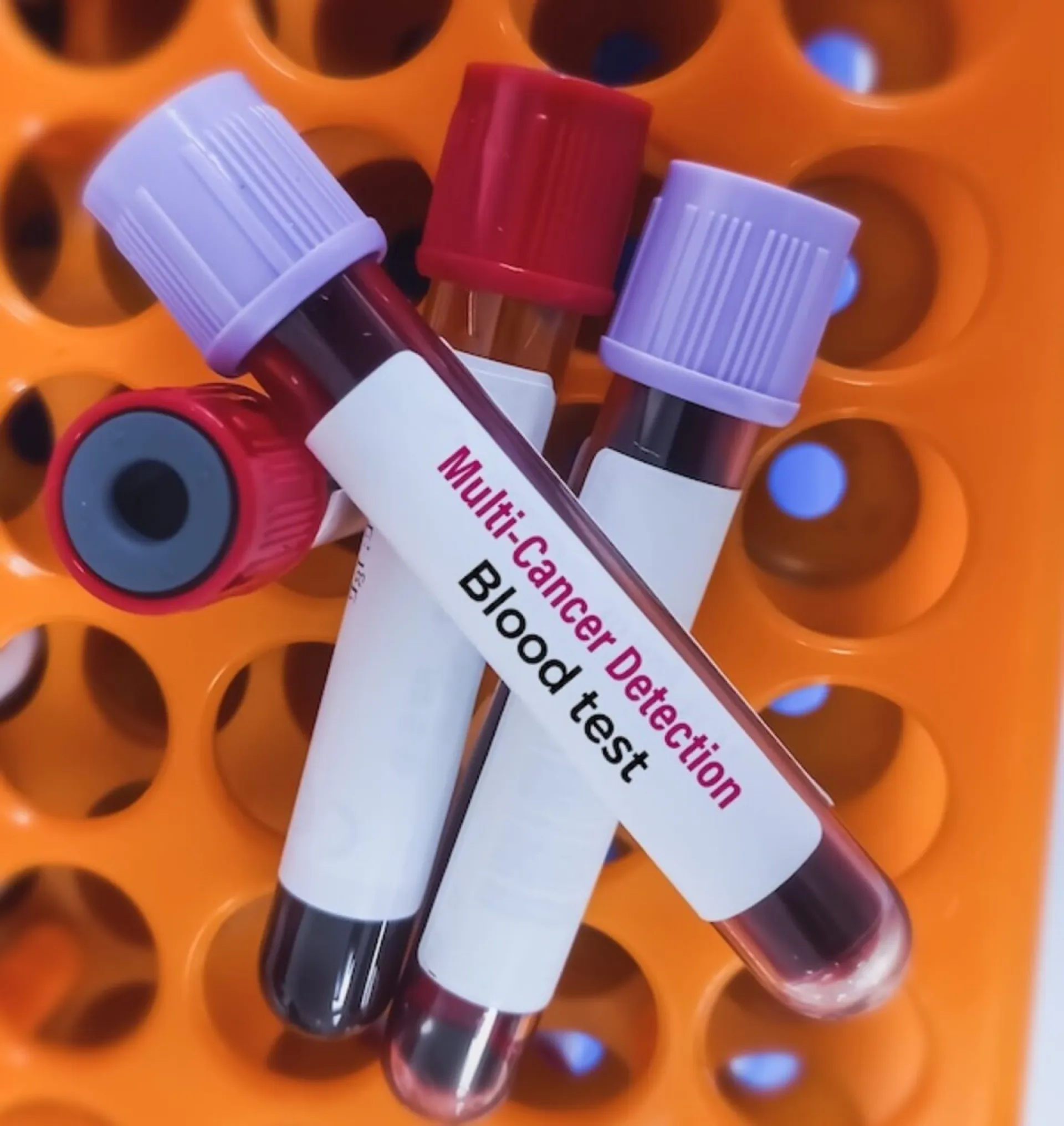
‘Systems Modelling to Determine the Societal Benefit of Multi-Cancer Early Detection in the Community’ project
This project is being conducted by Prof. Maarten IJzerman (ESHPM) in collaboration with Dr Özge Karanfil from Koç University, a partner in the UNIC alliance. A joint research network has been launched to build capacity for multi-cancer early detection (MCED) screening, a groundbreaking development in cancer treatment in which a simple blood test can detect up to 50 different cancers before symptoms are visible.
Although the MCED blood test is a promising tool in the fight to reduce cancer mortality, there is still a long way to go before it can be implemented at the population level.