
Operational management
Introduction
One university, one community, one common goal: to create a positive impact on society. Professional Services contributes by ensuring a vibrant and inclusive campus that offers a stimulating and safe environment for study and work: ‘a great place to work and grow’.
In 2024, Erasmus University Rotterdam (EUR) faced major challenges with a significant impact on both Dutch and international staff, such as the cuts that were announced to national higher education spending, and the Balanced Internationalisation Act (Wet Internationalisering in Balans, WIB). At the same time, EUR is facing ever-increasing costs, including for IT licences and services, energy, and maintenance and renovations in buildings on and off campus. This situation requires a high degree of willingness to change on the part of our organisation and staff, and a sharp focus on flexibility, prioritisation and long-term employability. In this context, in 2024, EUR’s Professional Services departments and faculties incorporated a 5% cut in their budgets for 2025.
Committed and well-supported staff are crucial for excellent research and education. In 2024, EUR took significant steps to improve staff satisfaction, long-term employability, leadership and an inclusive organisational culture.
The results of the second Engagement & Enablement (E&E) Scan show a slight increase in staff satisfaction (from 7.1 in 2023 to 7.2 in 2024), with high scores on commitment and job satisfaction. At the same time, high workloads and work-related stress remain key concerns. To ensure long-term employability, the university continues to invest in leadership development, career guidance, training and wellbeing initiatives. A focus on the career policy has also been incorporated into the Recognition and Rewards programme. EUR has taken concrete steps to embed new career paths and encourage ‘narrative-based working’.
Health, safety and wellbeing are high on the agenda. The figures for absences due to illness, an inspection report from the Netherlands Labour Authority and the results of the E&E Scan provided insights that were used to draw up concrete action plans to reduce psychosocial workload. This is consistent with EUR’s ambition to be a people-centred organisation.
Staff
Engaged staff members who receive the best possible support in their work are the cornerstone of excellent research and education. EUR therefore focuses on increasing engagement (commitment to EUR and to the work) and enablement (support to do the work well). This focus is reflected in various initiatives and policies, which collectively contribute to a healthy, stimulating and inclusive working environment.
Employee survey (Medewerkersonderzoek)
To gain insights into how its staff perceives the organisation and their work, EUR conducted its second employee survey in March 2024: the Engagement & Enablement Scan (E&E Scan). Learning about employees’ opinions and experiences in areas such as wellbeing, development, inclusion and leadership enables EUR to develop targeted policies to improve working conditions for all staff. Reporting experiences also enables organisational units and teams to engage in dialogue about how we can collectively make working at EUR even more enjoyable. The overall score was 7.1 in 2023 and 7.2 in 2024. We are heading towards our target of 7.5.
EUR staff are generally engaged: 76% of respondents (n = 1,671) gave positive scores for the four dimensions of engagement and 83% enjoy their work. EUR employees also have a positive opinion of their employer. When asked how likely they would be to recommend EUR as an employer on a scale of 1 to 10, they gave the university a score of 7.6. This is an increase on the 2023 score (7.3).
EUR staff gave lower scores in the areas of high workloads and work-related stress; 57% experience some degree of work-related stress, while 51% perceive their workload to be too high. These aspects have therefore been included in improvement plans.
The survey will be repeated in March 2025 to measure progress.
Recognition and rewards
In parallel with increasing engagement and enablement, EUR is working to strengthen the Recognition and Rewards programme. Because 2025 will be a transition year, in 2024 EUR focused on developing tools to enable faculties and service units to apply and implement elements of the Recognition and Rewards programme independently. A key example is the ‘Unlock your Team Potential’ workshop. In this workshop, teams and team leaders experience how diverse talents contribute to collective performance. In addition, the ‘Academic Career Paths: A Journey from Planning to Evaluation’ process description was developed. It serves as a guide through the process of creating differentiated career paths. Finally, webinars, workshops and handbooks on narrative writing were developed. This is relevant, as EUR asks staff to write narratives as part of the development cycle and when applying for a promotion.
Recognition and Rewards is increasingly embedded in HR policies and processes. One way this is done is by integrating the Erasmian Leadership Profile into career paths and promotion criteria. Another example is the new policy framework for career path options at the professor level.
In 2024, EUR strengthened its position within the nationwide Recognition and Rewards network, including by being represented in the national programme team, running workshops at national events and participating in the National Culture Barometer.
Careers and development
EUR believes in the importance of investing in the growth of long-term employable staff who are prepared for internal and external changes, now and in the future. Here the Learning & Career Centre (LCC) plays a key role. By providing a wide range of services in recruitment, learning & development, leadership and mobility – in collaboration with experts including Health and Safety at Work (Gezond & Veilig Werken) and the Recognition and Rewards team – the LCC supports employees to stay ‘fit for the future’.
Recruitment
In 2024, as in previous years, recruiters were committed to a pleasant, inclusive and fast selection process. Labour market shortages persisted in 2024, and this trend is expected to continue. Due in part to political developments and spending cuts in the sector, the recruitment of suitable staff is a major challenge. Nevertheless, many new staff were hired.
As well as developments relating to permanent positions, there was plenty of movement in the flexible labour market. The lifting of the enforcement moratorium on 1 January 2025 has contributed to a more limited and deliberate use of self-employed workers; among other things, it has resulted in more staff being hired as employees rather than contractors, and the use of other forms of hiring. The impact of the enforcement of the Employment Relationships Deregulation Act (Wet deregulering beoordeling arbeidsrelaties, DBA) is expected to become clearer in 2025.
There were also positive developments, such as EUR again holding on to the HR Excellence in Research Award. Even in these difficult times, EUR is committed to the principles of the European Charter for Researchers; the renewal of the Award is a clear demonstration of this commitment.
October 2024 marked the 10th anniversary of the LDE traineeship; ‘LDE’ stands for Leiden University, TU Delft and EUR. The 11th batch of trainees started the trainee programme in September 2024. Unlike in previous years, for cost reasons, the recruitment and selection process for this new batch was not outsourced, but was instead carried out by recruiters and HR staff at the three universities.
Development cycle
EUR attaches great importance to encouraging employees in their personal and professional development. In 2024, the first eight organisational units switched from the Performance and Development cycle to the Development cycle. The aim of the Development cycle is to create a shared focus between managers and staff in an accessible and structural way, centred around growth, development, wellbeing and strengths.
The organisational units concerned worked with the Recognition and Rewards team and the leadership development team to prepare for a new way of working. Through webinars, in-person training and online information sessions, managers and staff were trained and informed about their roles and responsibilities in the new process.
Since the initial implementation, there have been a number of evaluations in the form of surveys, interviews and MT evaluations. The results of these evaluations led to an improvement process, which doubled as preparation for the second round of implementation in 2025.
Leadership development
Leadership is a strategic priority for EUR and is a key part of the new 2025–2030 strategy.
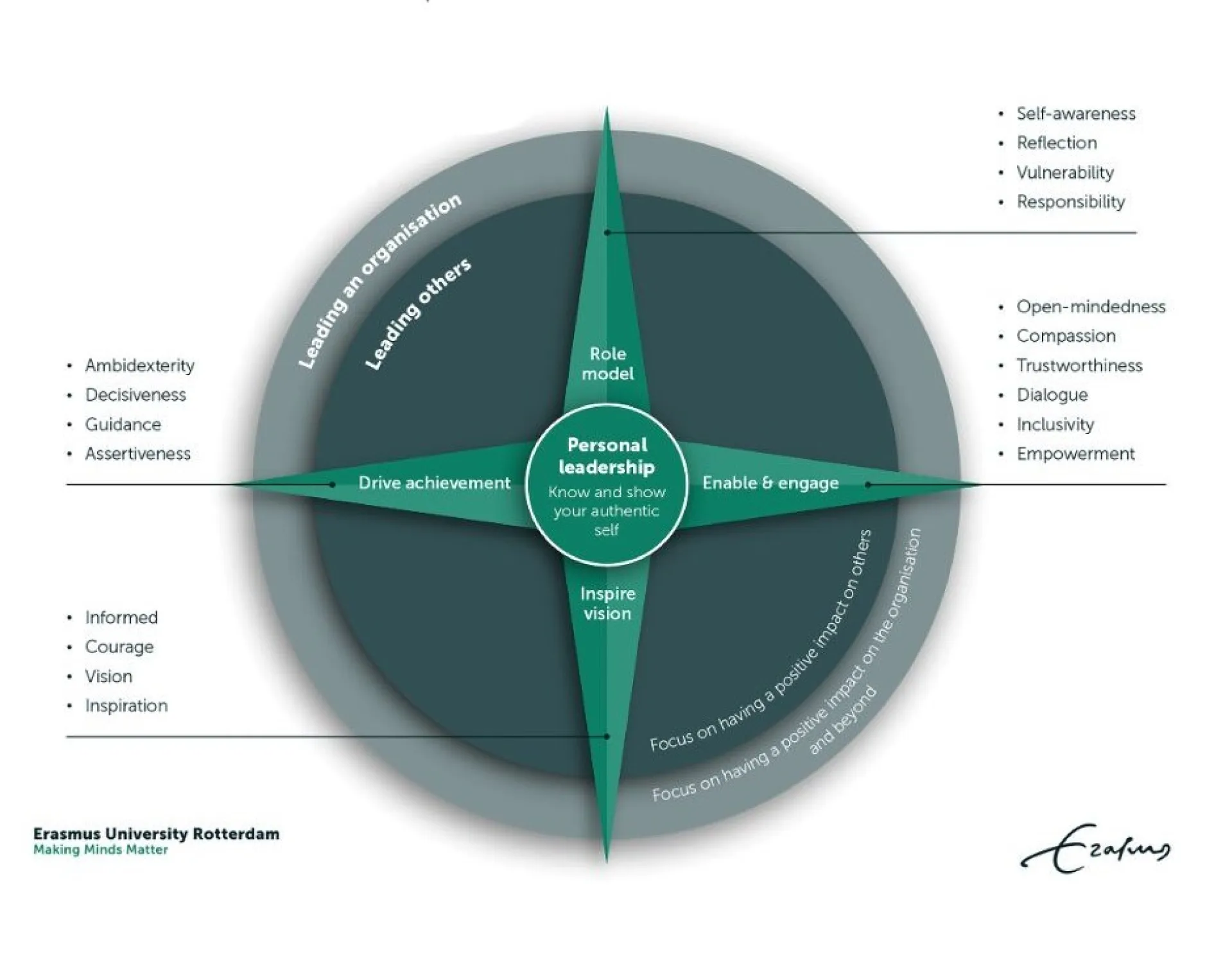
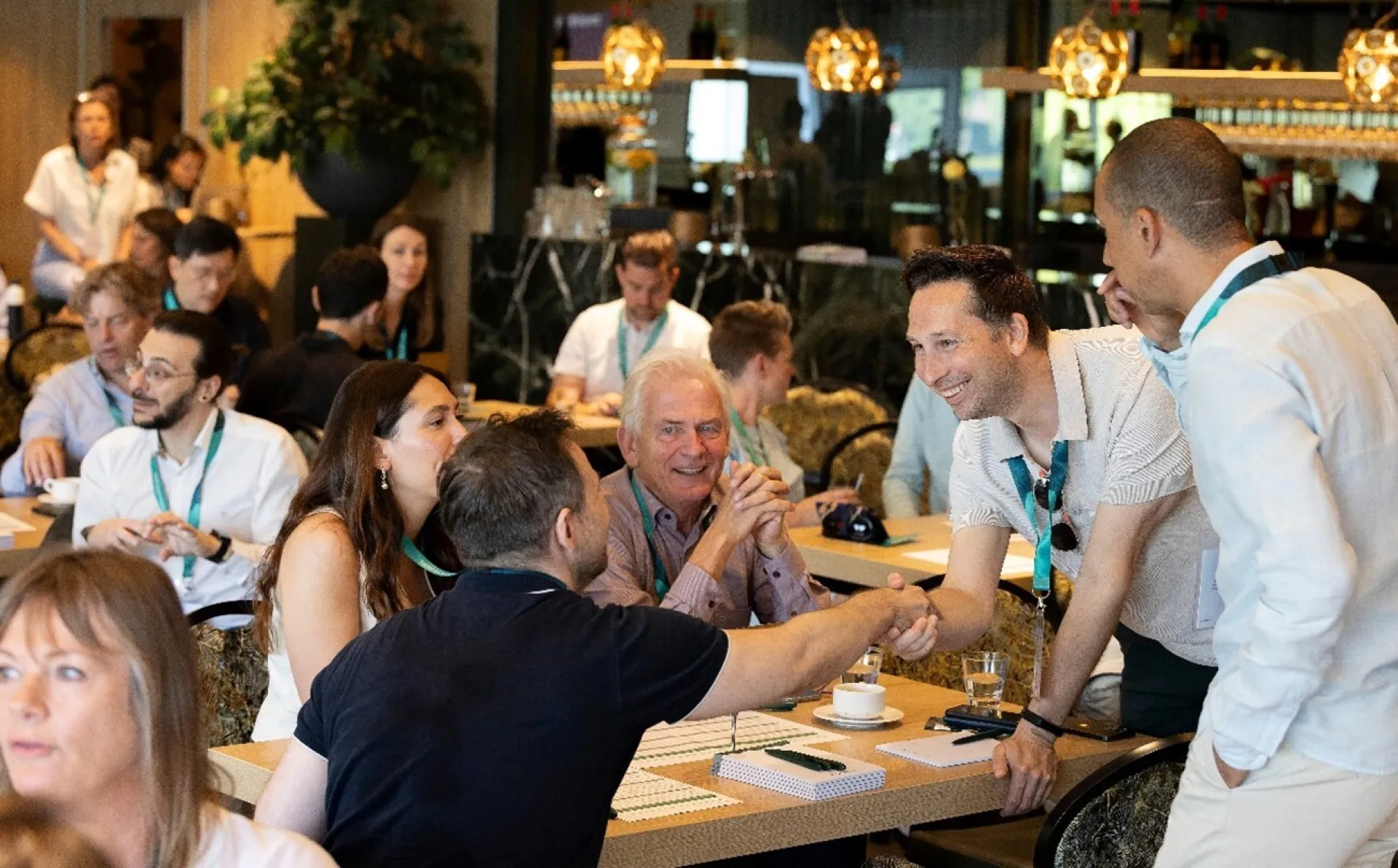
In 2024, the EUR-wide Erasmian Leadership Profile and the associated policy were rolled out in more faculties and service units. New initiatives such as onboarding training for managers, a pool of leadership coaches with peer feedback and community events were used to support managers with their development. One hundred and eighty managers participated in these activities. They attended Lunch and Leadership sessions and Leadership Days, which covered themes such as ‘Appreciative Inquiry’, ‘Deep Democracy’, ‘Non-violent Communication’, ‘Destructive Leadership’ and ‘The Manager’s Role in the E&E Scan’.
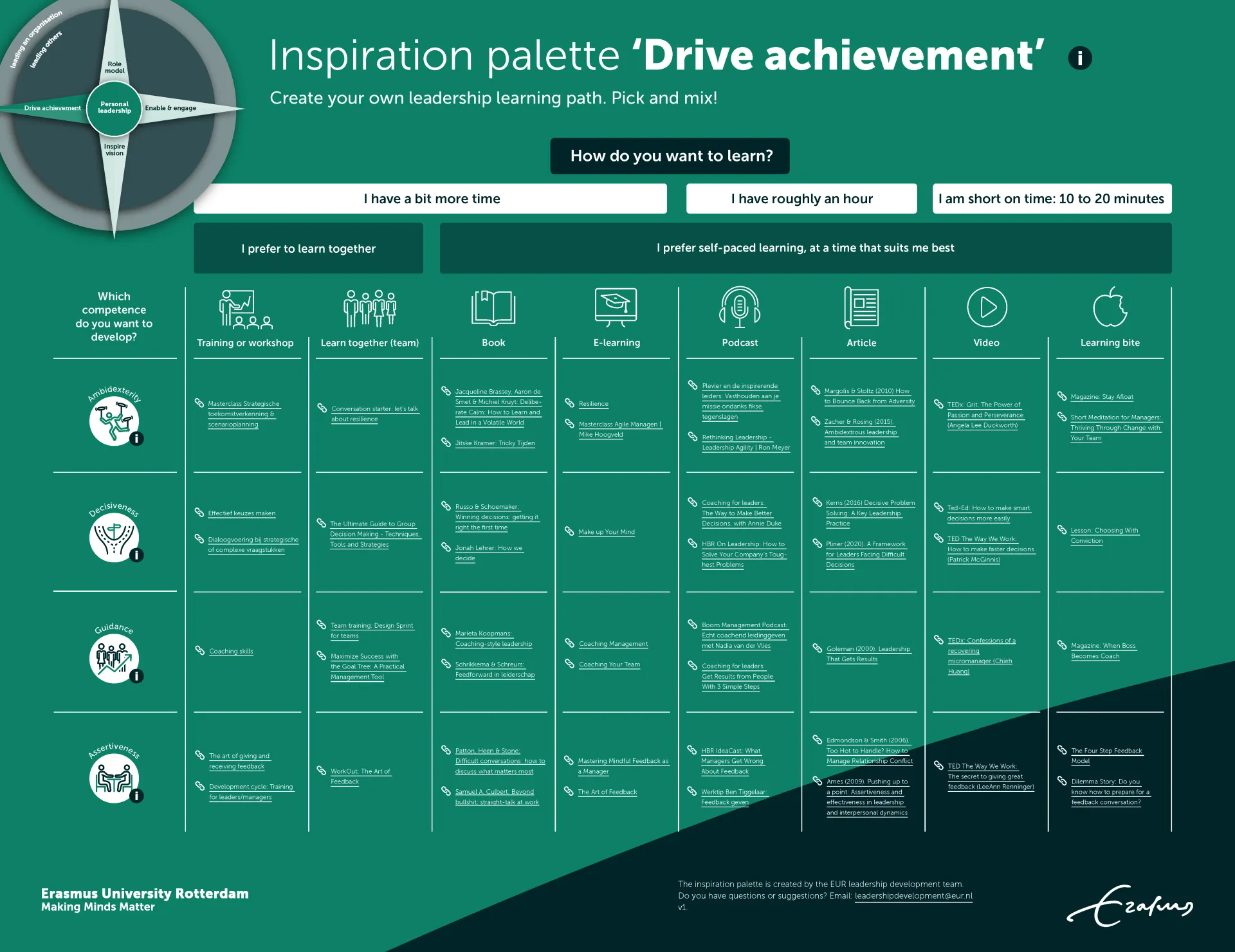
The pilot of a 360-degree feedback tool for managers was successfully completed; the tool will be incorporated into the Development cycle in 2025. In addition, four ‘inspiration palettes’ were created, based on the four main principles of the EUR leadership profile. These inspiration palettes contain various tools, resources and inspiration for further developing the different sub-competencies in the profile.
Getting managers to participate in community activities aimed at managers remains a challenge. The activities are not mandatory; due to high workloads, only about 60% of managers attend. Managers among academic staff attend in lower numbers than professional services managers.
Training and Development Platform (TOP)
The Training and Development Platform (TOP) organised fifty training sessions, ranging from career training to leadership programmes. These training sessions were attended by 424 participants and received an average rating of 8.5. The TOP also held trial sessions leading up to the start of new training courses. These short, informative sessions gave participants a preview of the new courses. The trial sessions were very well attended and received an average rating of 9. Alongside its standard training courses, the TOP also offered online training courses from GoodHabitz.
The TOP expanded its role in 2024 to include advice and support for specific issues and projects focusing on learning and development. This resulted in the co-creation of thirty customised programmes and in learning pathways for fields such as Social Safety, as well as for PhDs.
Career development and mobility
EUR is committed to taking a broad approach to career development, supporting employees in various ways to take control of their growth, wellbeing and employability. In 2024, the Learning & Career Centre (LCC) organised a number of initiatives that contributed to knowledge sharing, personal insight and mobility.
During Share Your Knowledge Week, staff members ran short, informal workshops for their colleagues to share their knowledge and experience. This enabled staff to interact in a different setting, expand their networks and learn from each other. The content of the 32 workshops offered was diverse, ranging from ‘Priorities: ‘Making it easier to say no’ to ‘An introduction to OpenAl’ and ‘Setting goals for success’.
In 2024, Career Week was renamed Career & Wellbeing Week. Indeed, as the results of the E&E Scan show, the balance between work and wellbeing is becoming increasingly important. The programme comprised 46 activities centred around professional and personal development and wellbeing. Examples include the focus on neurodiversity in the Neurodiversity master class ‘When All Brains Work’ and workshops such as ‘Fighting Fatigue’, ‘Boxing Coaching’ and ‘Resilience Booster’. In total, around 800 staff members attended Career & Wellbeing Week.
The week included PhD Career Day, aimed at doctoral candidates. This day consisted of a plenary opening session followed by two workshops: ‘Personal Branding & Networking’ and ‘Personal Leadership in How You Experience Work’.
International learning was also encouraged in 2024. Through ErasmusPlus, staff members were given the opportunity to gain work experience at European partner organisations through staff exchanges. To make better use of this programme, awareness of staff exchanges and the process around them has been strengthened over the past three years. With 177 participants over 2.5 years, the target has been well and truly achieved.
As well as collective events, EUR also offers individual career guidance. Both academic staff (40%) and professional services staff (60%) used the services of career coaches in 2024. Coaching questions from staff covered a range of areas, including taking the next step in their career or obtaining support for personal growth and development. A new aspect of career guidance in 2024 was the use of the Talents Motivation Analysis, an online assessment that provides clarity on employees’ motivations, talents and development opportunities.
When employees are faced with potential or imminent unemployment, Job2Job case managers provide support with finding a new position either within or outside the organisation. EUR is a self-insurer for the purposes of the Unemployment Insurance Act (Werkloosheidswet, WW) and the Work and Income (Capacity for Work) Act (Wet werk en inkomen naar arbeidsvermogen, WIA). This means that although the benefit is received by the current or former employee from the Employee Insurance Agency (UWV), it is paid by EUR.
Each year, Job2Job supports around 140 employees, of whom 60% are academic staff and 40% are professional services staff. Partly due to financial developments that meant temporary contracts were less likely to be converted into permanent appointments, this number increased to 200 in 2024
Workplace health and safety
In the development of the EUR strategy, the concept of a ‘people-centred organisation’ with a focus on staff wellbeing has become increasingly central. In the Netherlands, one in five workers suffer from burnout-like symptoms. There has also been a nationwide increase in absences due to illness, and this trend can be seen at EUR too. These societal developments, together with the spending cuts and other sector-specific trends, increase the importance and urgency of health, safety and wellbeing. As an employer, EUR must invest more over the coming years in retaining quality staff. It will do so by engaging, connecting, and above all, creating the right conditions for a pleasant working environment. HR contributes to these issues by working with the organisation to tackle high workloads and inappropriate behaviour and acting as a discussion partner in the area of leadership, particularly people-centred leadership.
In 2024, we reviewed the area of health, safety and wellbeing. Key inputs for this review included important insights from the E&E Scan, along with the figures for absences due to illness and the report from the Netherlands Labour Authority. The 2024 E&E Scan made a distinction between high workloads and work-related stress. This was a change from the 2023 scan, which only looked at high workloads. High workloads received an average score of 5.7 (2023: 5.5) while work-related stress received a score of 5.2. Staff assigned their work-life balance an average score of 5.6 (2023: 6.2). Once again, academic staff gave significantly lower scores on these themes than professional services staff. The results show that 19% of EUR staff sometimes or often experienced inappropriate behaviour in the workplace in 2024 (2023: 16%), while 21% of respondents said they did not know where to find support if they encountered a socially unsafe situation (2023: 26%).
Absences due to illness
Compared with Statistics Netherlands figures for the education sector as a whole (5.6% in 2023; no score available yet for 2024), EUR has a low rate of absences due to illness. However, significant differences can be seen by faculty and service unit.
table 20
| 2020 | 2021 | 2022 | 2023 | 2024 | ||||||
|---|---|---|---|---|---|---|---|---|---|---|
| RAI | RR | RAI | RR | RAI | RR | RAI | RR | RAI | RR | |
| EUR | 3.30 | 0.3 | 3.40 | 0.4 | 4.30 | 0.8 | 4.48 | 0.97 | 4.23 | 1.00 |
Compared with 2023, the rate of absences due to illness has decreased slightly, but the reporting rate has continued to increase. This is in line with the national average, which is around 1.0. This means that each employee reports sick once a year on average.
Health, safety and wellbeing developments
There were several developments in health, safety and wellbeing in 2024. For example, the contract with the new occupational health and safety service, Salude, began in March. This new contract will allow staff members to see a doctor sooner, both as a preventative measure and when they are absent due to illness. A tendering procedure was conducted for a new psychological support services provider; OpenUp was the company chosen. A pilot was launched in collaboration with care organisation Zorggenoot for providing support to staff members with informal care responsibilities. A tendering procedure was also conducted for a new absence tracking system to optimise absence management. XpertSuite was the selected solution; implementation will be completed in 2025.
In May, the Netherlands Labour Authority published its investigation report on psychosocial workload at Dutch universities. The report described the extent to which universities have made improvements relating to high workloads and inappropriate behaviour since 2021, and what effect these improvements have had. Based on the findings, EUR produced an action plan that will be implemented in 2025. The action plan includes an in-depth risk assessment and evaluation relating to psychosocial workload. The action plan also emphasises improvement and assurance through the PDCA cycle. The Labour Authority will again conduct an inspection at EUR in 2025. To provide insights into social safety services and policies for both the organisation and the Labour Authority, HR issued a Social Safety Inventory & Advice in 2024 in collaboration with Education & Student Affairs (E&S) and the IDEA Centre.
Diversity and inclusion - IDEA
An engaged university must be embedded in a supportive culture with committed and inclusive leadership. Diverse perspectives, experiences and knowledge are necessary to achieve our goal of genuine engagement. This means we are an accessible university for our students and staff; together, we are building a fair, inclusive and people-centred organisation. In 2024, HR and the IDEA Centre worked intensively together to increase awareness and strengthen policies on inclusion and diversity.
The basis for inclusion lies in fair recruitment and selection. HR and the IDEA Centre create awareness around inclusive recruitment and selection by providing feedback on job ads and organising training sessions. This collaboration contributes to a broader and more diverse influx of talent. Particularly in times of financial uncertainty and social pressure, strengthening connections and inclusiveness within teams is crucial.
Beyond 25/25
With the Beyond 25/25 programme, EUR aims to create a level playing field for academic staff; especially women and staff from migrant backgrounds, who are known to face greater barriers in promotion to senior positions. In this round of the programme, we welcomed 66 participants from all faculties. Mentoring was part of the programme. A number of workshops were organised, on topics such as ‘Safe and Brave Spaces’, ‘Finding the Common Thread in Academic Stories’, ‘Narrative Writing’, ‘Peer Feedback’ and ‘Designing Proactive Career Strategies’. In the end, 39 participants submitted their portfolio to the independent committee for feedback and 25 staff members applied for funding to work on improving their portfolio. During the programme, some participants received promotions, while others left the university. The sharing of information and knowledge and the sense of community were highly appreciated by the participants.
Implementation of the Jobs Agreement Act (Wet Banenafspraak)
EUR is committed to being an inclusive employer, including by applying the Participation Act (Participatiewet). In 2024, this resulted in twelve new staff members being hired. A total of 86.7 jobs were filled by employees from the Jobs Agreement target group in 2024, with 25.5 hours counting as 1 FTE. This is 69.5% of the target of 124.7 jobs. This means that the statutory quota for 2024 was not met; this was due to the supply of available candidates being too limited. Nevertheless, we are fully committed to making progress in 2025.
To improve the supervision of employees hired under the Jobs Agreement Act, ‘Harrie’ training courses were offered twice to supervisors and managers in 2024. These training courses provide theory, practical examples and tools to support new and existing employees hired under the Jobs Agreement Act. A total of seventeen employees obtained the certificate associated with the training course.
Support for international staff
To be an attractive employer for international staff and create a place where they feel at home, giving attention to the wellbeing of international staff is very important. The proportion of international staff was the same as in 2023 (26%). Despite the forthcoming spending cuts and the political desire for universities to focus more on Dutch-language education, it is essential that we continue to support our international talent.
When attracting and bringing in international talent, great care is taken to provide timely information and support, and to handle administrative matters for international staff where possible. For instance, there is a dual-career programme for accompanying partners, and agreements have been made with Rotterdam City Council regarding access to the housing market.
To maintain an international staff body, it is crucial that foreign STA members feel at home. Social connections and an understanding of the new environment and language play an important role in this. EUR offers activities to foster these connections and understanding. As well as courses at the EUR Language & Training Centre, the university organises Dutch Conversation Sessions to practise Dutch speaking skills.
With the increase in online working, the number of staff members working for EUR from abroad is also increasing. This has created new and complex issues which require EUR to provide support. For example, an employee in this situation may not be covered by Dutch social security. EUR provides assistance with these complex processes, making it possible to work for EUR while living in a neighbouring country. Guidance is available for employees who are going to work abroad temporarily.
Staff support networks
Staff networks are an important pillar of EUR’s inclusive organisational culture. Among other groups, the IDEA Centre supports ‘Females in Academia Moving towards Equity’ (FAME), QuEUR (for LGBTQIA+ staff and allies) and Young@EUR, a contact group for staff members up to 36 years of age.
EUR received two awards from Workplace Pride in 2024: the award for best role model (Prof. Annelien Bredenoord, President of the Executive Board) and the award for best staff network (QuEUR). EUR was also nominated in two other categories (game changer: Idea.net project; and ally of the year: Katarina Putnik). EUR also participated in the Workplace Pride Benchmark, where we achieved a good score of 54.6%, well above the average score of 37.1%.
FAME organised workshops on negotiation skills and menopause. This year’s FAME Athena Award was presented during the Dies Natalis to Prof. Pilar Garcia-Gomez.
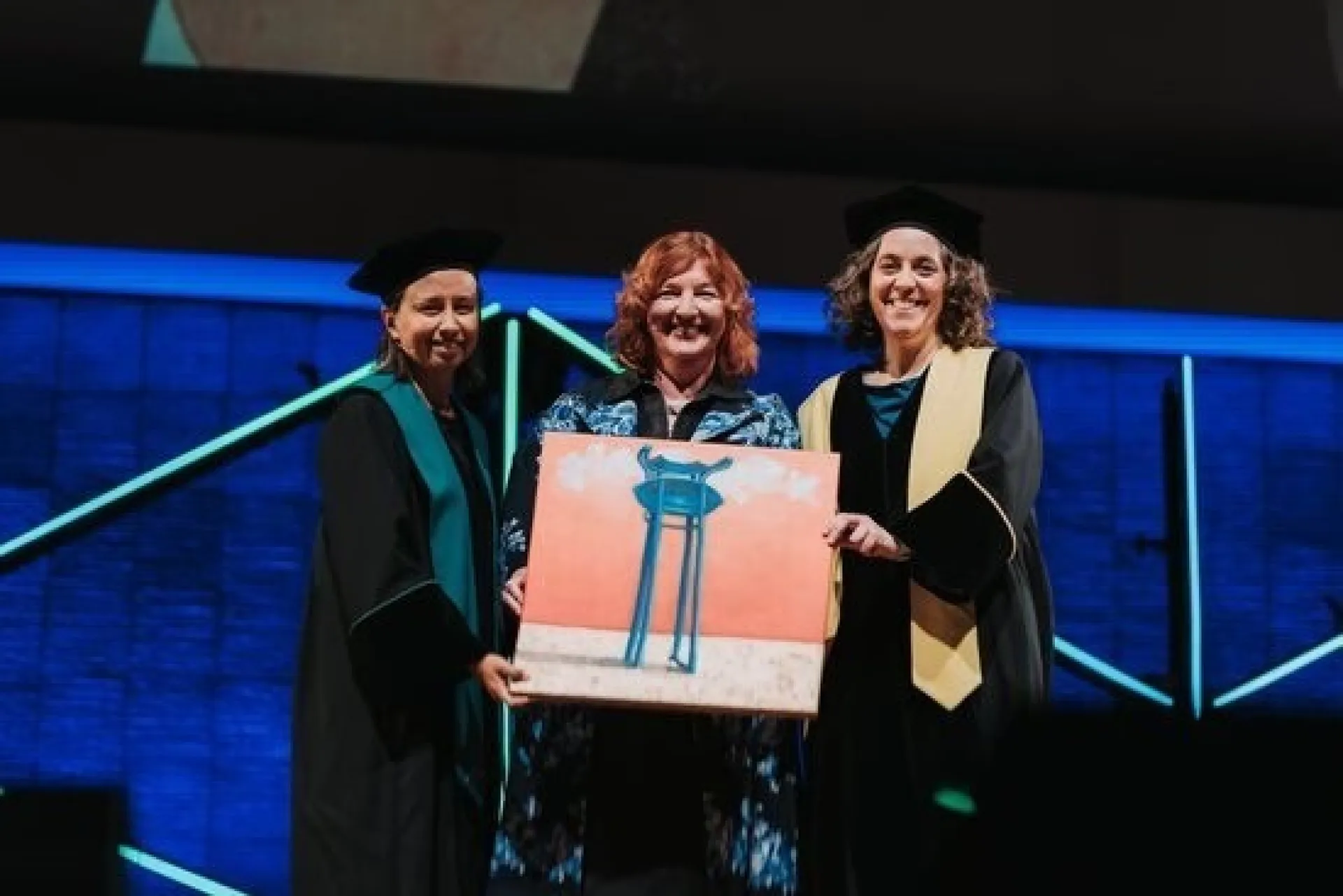
Young@EUR offers young employees among both academic staff and professional services STA the opportunity to develop their skills, broaden their knowledge and get to know their colleagues during various activities and social events. A new partnership has also been established with Rot.Jong, a network of organisations in Rotterdam that organises events for young professionals.
Policy and monitoring
Good policy requires data and transparency. EUR hired an external agency to conduct a comprehensive pay gap analysis focusing on gender and nationality-based differences among both academic and professional services staff. The results are available here. Starting in 2026, organisations of our size will be required to conduct annual pay gap analyses. Further work was done on inclusive questionnaires, an inclusive language guide and wider sharing of knowledge and expertise on IDEA topics. This was done through in-house and external workshops, training sessions and lectures for students and staff.
The workplace
The physical and digital workplace plays an important role in enabling staff and students to thrive in their work and studies. The policies and operational management underpinning the workplace also determine EUR’s societal impact, for example on sustainability and accessibility issues.
The campus
The Campus in Development (Campus in Ontwikkeling, CiO) investment programme started in 2010 and has been through three official phases of development. An exploratory study on a fourth CiO phase was submitted to the Executive Board in early 2023. At that time, following the recently completed construction of the new Langeveld Building and Sports Building, the decision was made to focus on a more efficient use of existing facilities, such as renovation of the Tinbergen Building, rather than constructing another new building.
The Executive Board approved the renovation of the Tinbergen Building. The project is being carried out by Berghege Heerkens Bouwgroep. Work has started on developing a technical design that is ready to implement. At the same time, the demolition and remediation of the building interior and cleaning of the façade have begun. In 2024, climate improvement measures in the new Sports Building were prepared and implemented under guarantee.
Due in part to the current financial uncertainty, a study on how office space can be used more efficiently was launched from the perspective of Tomorrow’s Campus. The efficient use of space was already the guiding principle behind the study, but the project has gained momentum due to the new government’s policies. Real Estate & Facilities (RE&F) is talking to all faculties to find out the extent to which they can achieve a more efficient use of office space. The outcomes from this study will lead to a phased development plan.
Campus accessibility
An action plan to improve the physical accessibility of the campus was adopted in mid-2022. This forms part of an overall action plan that will be executed under the supervision of Education & Student Affairs (E&S). To this end, several awareness-raising sessions were organised to create a better understanding among RE&F departments and staff from other departments of the constraints people may experience on campus.
The Physical Accessibility Compliance (Compliance fysieke toegankelijkheid) and Physical Accessibility Policy (Beleid fysieke toegankelijkheid) projects have improved the physical accessibility of the EUR campus. In 2024, the focus was on making adjustments at campus entrances and exits. This included widening footpaths, removing obstacles, installing a temporary ramp on Van der Mandeleplein, adding and adjusting markings on glass façades and glass entrance doors, and improving the provision of information about accessible routes.
Student housing
The division of roles between EUR and Rotterdam City Council in the development of the student housing site on Abram van Rijckevoorselweg has been reviewed. The city council is taking the lead in site development and in selecting a company to carry out the programme. This aligns with the city council’s expertise and experience. The land on which the student housing development will be built is owned partly by Rotterdam City Council and partly by EUR. A Memorandum of Understanding was jointly drawn up by the parties and serves as the basis for the procedure, with local student housing corporations also being approached.
In 2024, the financial summary statements of the project were reviewed, taking into account the contributions of all parties and the financial viability of the project. The business case did not stack up. The city council is now investigating whether it will still be possible to carry out the project.
Design of the perimeter road
The ‘Southern Campus’ (Campus Zuid) project concerns the design and implementation of the outdoor space in the entire southern part of the campus, including the construction of the perimeter road. The perimeter road involves three landowners: EUR, Rotterdam University of Applied Sciences (Hogeschool Rotterdam) and Rotterdam City Council. The city council is transferring its title to the perimeter road land to EUR for no consideration, which will simplify matters. The management and maintenance of the perimeter road will become the responsibility of EUR. In the current situation, according to the Land Register, the perimeter road belongs to Rotterdam University of Applied Sciences, EUR and Rotterdam City Council. They are each responsible for their own section, as recorded in the Land Register. This includes financial responsibilities. Discussions are underway between Rotterdam University of Applied Sciences, Rotterdam City Council and EUR to reach new agreements with regard to this road and record them in a contract. The precise details of these agreements are not yet clear. The preparations for phased implementation have been arranged to enable a tendering procedure to be conducted in 2025. The tendering procedure for a final design for the Southern Campus project has been delayed due to market and other developments, including developments around student housing. Owing to the education funding cuts, the tendering procedure has been revised, and options to complete the project within the set budget are being explored. This has led to a delay in the tendering procedure. The contractor will start work at the site in late 2025.
Culture and Campus
This project involves a collaboration between various education-sector parties and the city council, encompassing the strands of education, research and facilities services. Prior to the development on Doklaan in Rotterdam, a site on De Hillevliet was used. The costs of this project are covered by the European Bauhaus grant programme. A site on Putselaan will be ready for occupation in mid-2025. Rotterdam City Council owns the building and is handling the renovations, including the shell. A project manager, who was appointed by Rotterdam University of Applied Sciences last year, will then take care of the fit-out package. EUR will be the main tenant, with the other Culture and Campus partners being subtenants.

The digital working environment
Study, research, operational management and collaboration are almost inconceivable without support from digital resources. Reliable, secure and permanently accessible information is therefore essential.
The digital world is constantly evolving and developing. Innovations in education and research also require new ways of accessing and handling data. There is a constant stream of new ICT technologies on the market that need to be adapted to fit into EUR’s ICT landscape. The desire to be allowed and to be able to use cutting-edge technology quickly and the commitment of the research community to open data and open science are often frustrated by the increase in cyber threats and cyber crime. It is the task of the Erasmus Digitalisation & Information Services (EDIS) to work with the faculties and other service units to find the right balance.
Artificial Intelligence (AI)
In recent years, the use of artificial intelligence (AI) has suddenly become a hot topic, including in research and education. However, from a data security perspective, the large-scale use by EUR staff of the various ‘free’ versions of large language models (LLMs) available to the public is undesirable. After all, there is no such thing as free software or solutions: there is usually a cost in the form of data. Subscription versions also offer insufficient data security and ownership. A pilot was therefore launched with a version of ChatGPT designed specifically for EUR. In 2024, several pilots in the education sector gained experience with Erudite, our own secure version of OpenAI’s ChatGPT. Based on these pilots, Npuls[1] has launched a nationwide solution. This allows us to use various LLMs in a safe and transparent way. EUR was closely involved in the development of this solution. In addition, Erudite is still available for use.
Security
The threat of major cyber incidents in the Dutch education and research sector is increasing every year. Accordingly, EUR is constantly working on security measures to increase the resilience of our organisation. In 2024, for instance, EDIS set up a process to identify key cyber risks and the development of plans to manage them. The identified risks were assessed, risk owners assigned and mitigating measures determined. Regular monitoring of the progress and effectiveness of these measures is part of the process.
Following on from the EV3 programme from 2023, we successfully implemented the EV24 programme in 2024. An external audit firm assessed whether the central and decentralised information provision management processes and ten core systems meet the national requirement of Maturity Level 3. The criteria for this level are: “Control measures are documented and implemented in a structured and formal manner. Implementation of the measures is demonstrable, tested and effective”. According to the results of the EV24 programme, with an average score of 3.3 – on a scale from 1 to 5 – EUR is once again among the best-performing universities in the country. The upcoming EV25 programme is dedicated to horizontally broadening EUR’s cybersecurity maturity, with more new applications being included in the programme.
Education
Digitalisation and its continued development can no longer be ignored as key elements in education. For this reason, the Data-Supported Work in Education (Data Ondersteund Werken in het Onderwijs) project was launched in 2024. The aim is to use targeted data analysis to take the next step in improving educational support and quality. Within a new data expertise (project) team, data analysts in the faculties will work together to identify needs and deliver concrete data products. This could include analyses and dashboards relating to student progression, enrolments and registrations, specialisations, minors and Master’s programmes.
[1] Npuls is a collaboration programme between the Netherlands public education sector (specifically senior secondary vocational, higher professional and academic education) and the IT cooperative SURF.
Research
Erasmus Research Services (ERS), the University Library (UB) and EDIS are working together to set up the EUR Digital Competence Centre (DCC). On 1 September 2024, the first two multidisciplinary ‘capability teams’ were launched as a pilot. The aim of the pilot is to find a good form of cooperation, define the existing services and determine the services that are still missing. The pilot will run until April 2025. This will be followed by an evaluation and the launch of the other two planned capability teams.
EDIS was also involved in making IT infrastructure and software available to researchers. This included the following projects:
- the further development and rollout of Yoda, together with SURF and ten sister institutions, to create an adequate and FAIR-proof data management and publishing environment;
- the creation of a project portfolio management system for research;
- further development of the Dutch Research Council LDCC2 project, which aims to find an effective way to make virtual research environments (VREs) available to EUR researchers and research groups.
Operational management and generic IT
In 2024, a contract for the replacement of the central HR and Finance operational management systems was awarded following a European tendering procedure. The SAP systems are being replaced with Oracle solutions. The VB26 implementation project started in September 2024, with delivery scheduled for January 2026.
The solution selected for the operational management systems is in line with EUR’s cloud policy, which was adopted in 2023. The aim is for all applications and data storage to be hosted in the public cloud on the basis of market standards and technologies by 2027. This will offer the following benefits:
- reduced security risks due to standardisation (market compliance);
- increased flexibility;
- increased scalability;
- better cost control in line with activities;
- better integration with partners;
- sustainability benefits through lower energy and resource consumption.
Migration of the ordinary ‘active’ data storage[1] of the faculties and service units to the EUR’s public cloud environment was completed in 2024. In addition, work continued in 2024 on the Data Centre Migration project, which aims to have moved almost all workloads from the on-premises data centre to a SAAS, IAAS or PAAS solution in EUR’s public cloud by 2027.
Policies and frameworks
There is a strong need to be able to assess projects that have an information supply/IT component in a broader context and from a long-term perspective, and to have more flexibility to change priorities and budgets while projects are underway. Accordingly, further work has been done to develop the portfolio board process (PPB). The EUR capability model, which was delivered in 2024 and is based on the Higher Education Business Capability (HEBCM) model, provided a much sharper, shared picture of the needs of the faculties and service units and of developments within the sector.
In the area of data-driven work, the EUR Data Architecture was formally adopted in 2024. This provides a solid framework for managing and using data within the organisation, focusing on the analytical layer. The Document Information Management (Documentair Informatie Management, DIM) expertise team has prepared Roadmap AW26. This consists of new and existing activities and projects that contribute to, or will ensure, a better score for EUR in the biennial Public Sector Information and Heritage Monitor (Monitor Overheidsinformatie en Erfgoed, MOE). When reviewed in the 2023–2024 academic year by the Information and Heritage Inspectorate (Inspectie Overheidsinformatie en Erfgoed), EUR’s scores were unsatisfactory in some of the five focus areas. The new Archives Act (Archiefwet) is expected to come into force in mid-2026. It provides for penalties in the form of administrative fines if certain conditions are not met.
[1] In addition to ‘regular’ data storage, EUR also has dedicated data storage for research data.

Sustainability
Sustainability has been on EUR’s agenda for a long time. EUR aims to be one of the most sustainable campuses in the Netherlands.
Sustainable procurement
Sustainable procurement relates to the purchasing and tendering of supplies, services and work. Using the petal model from the government’s Socially Responsible Commissioning and Procurement (Maatschappelijk Verantwoord Opdrachtgeven en Inkopen, MVOI) manifesto, EUR’s ambitions have been further specified and subdivided into six themes: climate, circular, supply chain responsibility, diversity and inclusion, social return, and environment and biodiversity. For tenders with high-impact opportunities, separate thematic sessions are organised to explore sustainability contributions and objectives.
Reporting carbon footprints
The urgency of climate change, environmental degradation and the need for sustainable development have led to increasing pressure on companies to reduce their negative impact on the environment and society. The Corporate Sustainability Reporting Directive (CSRD), introduced in 2023 and aligned with the European Green Deal, requires detailed and standardised sustainability reports. EUR has therefore decided to further reduce its carbon footprint by implementing different calculation methods and expenditure analyses. This will allow us to meet the CSRD requirements. The carbon footprints for 2022 and 2023 met these standards, and were calculated in accordance with the CSRD guidelines for the first time in 2024.
Built environment
The Executive Board adopted the Buildings Energy Transition Portfolio Roadmap (Portefeuilleroutekaart Energietransitie Gebouwen, PEG) in 2022. Around €20 million was released for additional measures to improve insulation in existing building stock and facilitate smarter energy management. This included LED lighting in Bayle and connecting Bayle to a thermal energy storage (TES) system.
The Tinbergen Building has been awarded a BREEAM Outstanding design certificate. We are also looking at ways to optimise sustainability during the renovations. This issue is being discussed by the sustainability working group, which is meeting every fortnight during the early stages of the renovation work. In the Langeveld Building, a ‘sustainability walk’ was created in 2024. Sustainability plaques at various locations in the building inform users about the visible and invisible sustainable features of the building.
Green Campus
The renovation of the pond near the Pavilion has been completed, using environmentally friendly design tools. The result is an animal-friendly bank surrounded by biodiversity-enhancing native trees and plants.
Waste management
Once again, the campus became increasingly sustainable last year. For example, Seenons was selected to dispose of the waste. It is an innovative company that will contribute to our ambition of zero waste by 2030. The contract with Seenons will start in 2025.
Food and catering
Policy development on a roadmap began on 1 February 2024 and was completed by the end of June. The main change is the shift from the original goal – an entirely vegan campus by 2030 – to a more comprehensive Planetary Health Diet. This is a science-based and proven sustainable and healthy diet, also known as the ‘win-win’ diet. This flexitarian diet is designed to improve both people’s health and the sustainability of the planet. In 2025, the decision-making process and the raising of support will continue.
A tendering procedure was conducted for a new hot drinks contract. Maas was again awarded the contract. All beans and tea have been certified organic, and a key performance indicator for circular agriculture has been established to expand the now nine coffee machines on campus to include plant-based milk toppings.
ICT equipment
Sustainability in relation to IT and ICT equipment is mainly about three issues: the environmental footprint of ICT equipment in terms of its production and transport, energy consumption, and the consequences in terms of disposal when it reaches the end of its useful life. In 2024, we took action in all these areas.
We had already decided in 2023 to extend the depreciation period, and thus the economic life, of laptops and other devices by a year or more. In 2024, the life of audiovisual (AV) equipment was extended from five to seven years. In addition, a system was set up that automatically switches off AV equipment in lecture halls when not in use. This equipment used to be left on permanently.
The previously planned large-scale replacement of network equipment did not go ahead. In practice, network equipment lasts considerably longer than the five years previously assumed, which was based on economic depreciation. From now on, we will only replace equipment when it has reached the ‘end-of-life’, ‘end-of-support’ and/or ‘end-of-sale’ period.
More than sixty PCs have been permanently removed from the study areas in the University Library. This was previously done as a pilot. They have been replaced with a setup comprising only a docking station, monitor, mouse and keyboard. This better suits the needs of today’s students (often the cables were already disconnected from the PCs so students could plug in their own laptops) and it also provides an immediate sustainability benefit. Over the next few years, the number of desktop PCs in study areas will be further reduced.
Finally, in 2024, close to a thousand depreciated desktops and laptops were donated to the EcoWare training company, which gives these devices a second life as refurbished items.
Procurement
In 2024, EUR collaborated with other purchasing organisations wherever possible on the procurement of resources and services. This was done to promote efficiency and effectiveness. EUR is a member of SURF, the cooperative association for Dutch education and research institutions. Within SURF, universities, universities of applied sciences, secondary vocational education institutions, university medical centres and research institutes work together on optimal procurement and development of digital services, to share knowledge and stimulate innovation. In 2024, EUR participated in nine tendering procedures organised by SURF.

SPOTLIGHT
Tinbergen Building: sustainable renovation
The renovation of the Tinbergen Building, which started in July 2024, illustrates EUR’s forward-looking operational management. Instead of constructing a new building, the focus is on circularity and a more efficient use of existing facilities. This is enhanced by environmentally friendly measures such as improved insulation, energy-efficient lifts and solar panels. The materials removed during the renovations will be reused as much as possible. The glass structure will offer views of the Rotterdam skyline, while green elements will promote a healthy learning and working environment. This approach contributes to EUR’s strategy of strengthening teaching and research with modern facilities and a sustainable campus environment.